
Backrooms Levels Guide: Level 0, Exits, Danger & Canon
Backrooms levels are the backbone of the setting, but they are also where beginners get lost fastest. This guide explains how to read level pages, why Level 0 matters, what exits and danger ratings mean, and why different Backrooms communities may describe different versions.
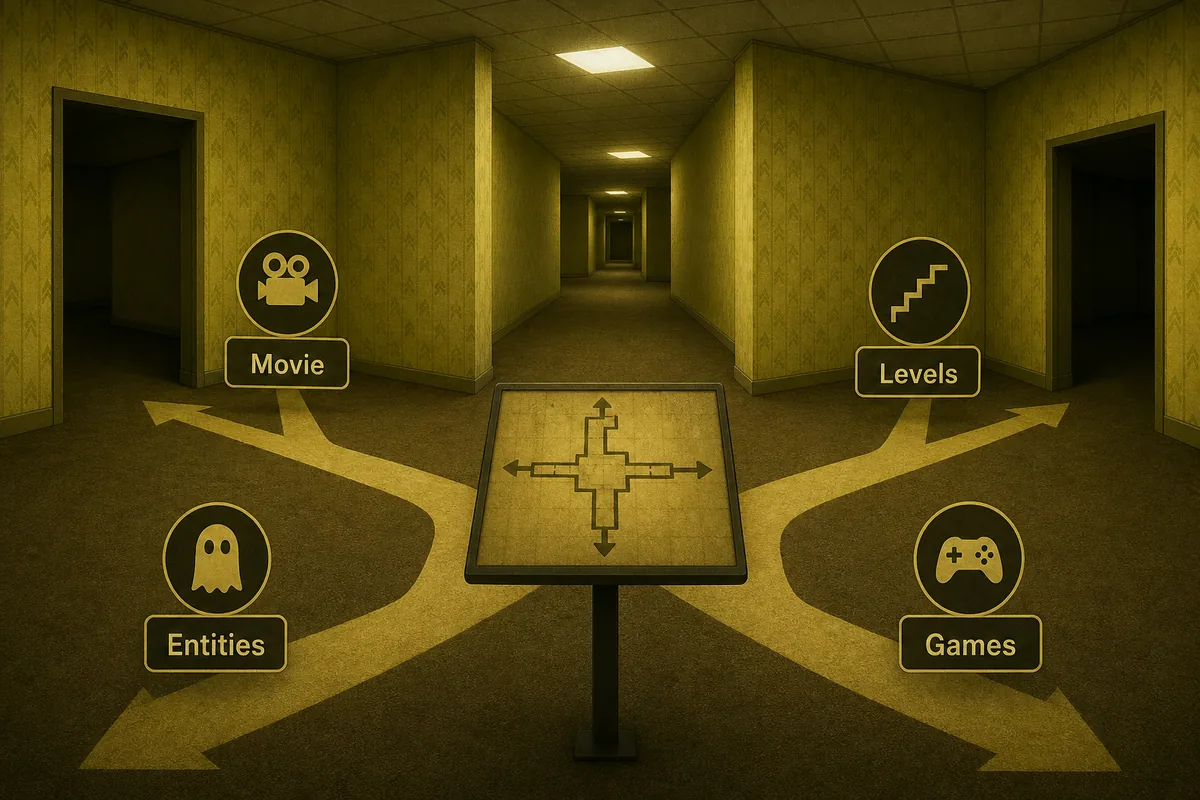
How Backrooms levels work
A Backrooms level is a distinct space or environment inside the wider horror setting. A useful level entry should answer four questions quickly: what does the place look like, how dangerous is it, what entities or hazards may appear, and how can someone enter or exit? Without those fields, a level page becomes atmosphere without navigation.
Level systems vary by community. Wikidot, Fandom, games, videos, and original fan projects may share recognizable ideas while disagreeing on details. This site treats levels as editorial guide entries: source context first, survival usefulness second, and lore flavor third.
Level 0 is the best beginner page
Level 0 is the iconic entry point most people imagine when they hear The Backrooms: yellow walls, fluorescent lights, damp carpet, repeating rooms, and a feeling of endless office space. It matters because it defines the tone before the setting expands into stranger levels.
For SEO and user experience, Level 0 deserves its own future detailed page. It can answer what Level 0 is, how to escape it in different versions, whether entities appear there, why the yellow-room image became iconic, and how games reinterpret the original concept.
| Level field | What it should explain | Why users care |
|---|---|---|
| Environment | Visual layout, materials, light, sound, and repetition. | Helps readers recognize the level. |
| Danger | Hazards, entity risk, isolation, and resource problems. | Helps players and readers judge survival risk. |
| Exits | Known or rumored ways to leave the level. | Turns lore into navigation. |
| Source | Which wiki, game, video, or fan version is being described. | Prevents canon confusion. |
Best Backrooms level pages to create next
The first expansion should focus on beginner and iconic levels, not every possible fan entry. Level 0, early survival levels, the Poolrooms-style liminal spaces, and high-search dangerous levels usually create clearer pages than obscure level stubs.
Each future level page should link back to the entity guide when a threat appears, to the game guide when a playable version uses that level, and to the beginner lore page when source context matters. This keeps the level database from becoming isolated lists.
- Create a full Level 0 page before deep fan levels.
- Prioritize levels with search demand, distinctive visual identity, or game relevance.
- Use tables for danger, exits, entities, and source context.
- Avoid presenting one community canon as universal.
Backrooms levels guide template
Every future Backrooms levels page should begin with a short answer. If a reader searches for a level, they need to know what the place is, how dangerous it is, and how the page source should be interpreted before reading atmosphere. A clear Backrooms levels guide template prevents the database from becoming a pile of disconnected stories.
The first block should summarize environment, class or danger level, known entities, resources, entrances, exits, and source context. The second block should explain the level in plain language. The third block should compare lore behavior with game behavior when the level appears in a Steam, Roblox, or indie Backrooms game. This is especially important because games often change exits, entity placement, and puzzle requirements.
A Backrooms levels guide should also explain uncertainty. Some levels are widely recognized, while others belong to a specific community branch or fan project. Instead of hiding that difference, the page should name it. Readers trust a level page more when it says which version is being described and which details may change by canon.
The highest-value expansion after this hub is a Level 0 page, then pages for early survival spaces and recognizable liminal environments. Level 0 can link to the what-is explainer, the entity guide, and the Escape the Backrooms guide. Later Backrooms levels pages can link to specific entity pages and game walkthrough sections when the connection helps a reader make sense of the hazard.
A Backrooms levels guide should also include comparison language when a level appears in a game. A wiki version may describe an open-ended environment, while a game version may add keys, doors, timers, or scripted entity movement. Naming that difference helps the user understand why a Backrooms levels page can be accurate for lore while still incomplete for a walkthrough.
For future pages, the phrase Backrooms levels guide template matters because it keeps the database consistent. Every level page should answer what the level is, why the level matters, what the danger is, how exits work, and which source is being followed. That pattern is more useful than publishing many short level summaries with no shared structure.
Depth should grow from user questions. A Backrooms levels page for Level 0 should answer how the space looks, whether entities appear, how exits are described, and why the yellow-room image became the default symbol. A page for a dangerous level should lead with risk, route limits, entity presence, and survival mistakes. A page for a game level should explain objectives, checkpoints, and how the playable route differs from community lore.
The hub should also prevent list fatigue. Readers do not need hundreds of short Backrooms levels before they understand the first five. They need a reliable pattern that helps them compare environment, danger, entities, exits, and source labels. Once that pattern is clear, a larger Backrooms levels database can expand without becoming confusing.
This is especially important for visitors coming from games or the movie. They may know the yellow rooms but not the language of level classes, entrances, exits, and source branches. A careful Backrooms levels guide turns that first impression into a readable map instead of a wall of unexplained numbers.
For each new entry, the editorial question should be: can the reader identify the level, judge the risk, understand the exit logic, and know which version is being discussed? If not, the level summary needs more structure before publication.
| Page block | Required detail | SEO purpose |
|---|---|---|
| Fast facts | Environment, danger, entities, entrances, exits. | Answers the search immediately. |
| Plain explanation | What the level feels like and why it matters. | Helps beginners understand context. |
| Source note | Which wiki, game, video, or fan branch applies. | Avoids canon confusion. |
| Related links | Entities, games, and beginner lore pages. | Builds a useful Backrooms levels cluster. |
Backrooms Levels FAQ
What is the first Backrooms level?
Level 0 is the most recognized starting point: a yellow, fluorescent, maze-like liminal office space.
How many Backrooms levels are there?
There is no single final number because different communities and projects define levels differently.
Are Backrooms levels connected?
Many level descriptions include entrances and exits, but the connection logic differs by source.
Do Backrooms games use the same levels as the wiki?
Games often adapt familiar ideas but simplify or change levels for gameplay, pacing, and multiplayer design.