
Backrooms Level 0 Guide: Entities, Exits & Rules
Backrooms Level 0 is the yellow maze most people picture first: repeating wallpaper, fluorescent lights, damp carpet, empty office corridors, and no reliable map. The quick answer is that Level 0 is usually treated as the starting point of the Backrooms, but exits, entities, and survival rules change by source. Use this guide to separate broad Level 0 lore from Wikidot, Fandom, video, and game-specific details.
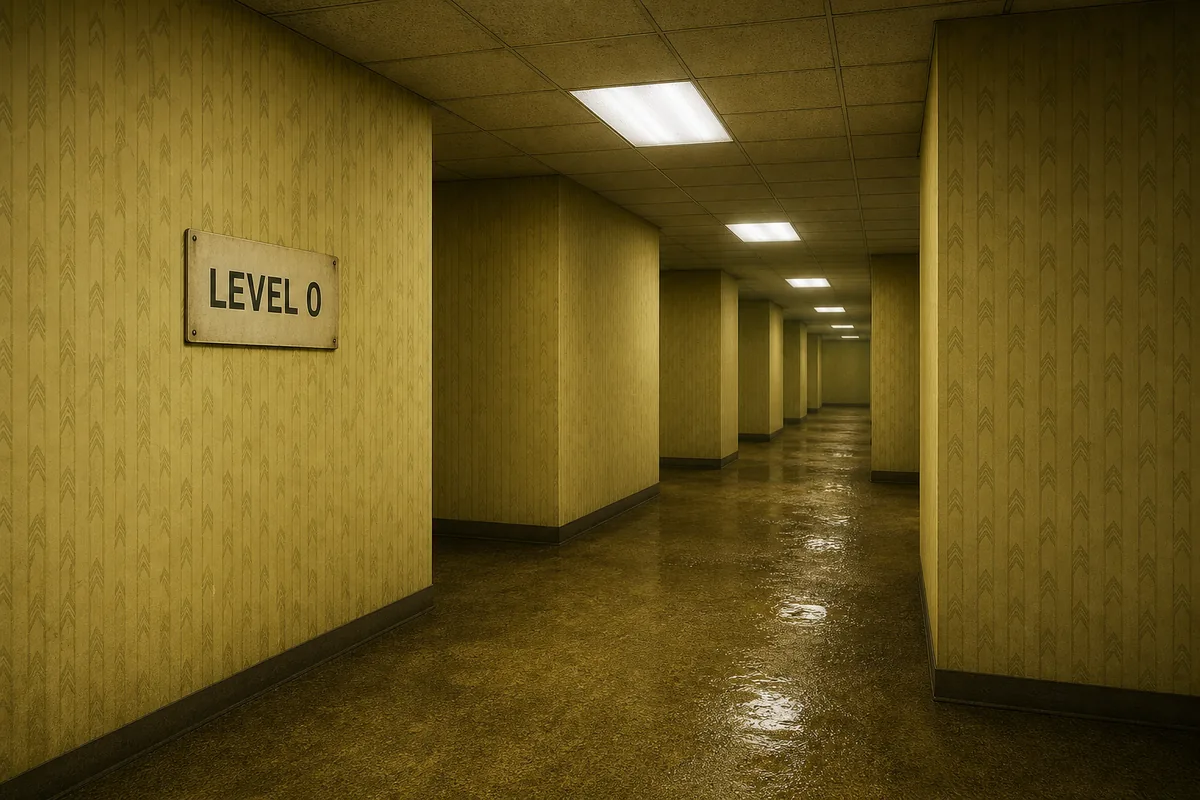
What is Backrooms Level 0?
Backrooms Level 0 is the most recognizable entry level in the setting: a seemingly endless office-like maze with yellow walls, buzzing fluorescent lights, damp carpet, and repeated rooms that make distance hard to judge. It is often called the first level because it preserves the original liminal horror idea before later levels add warehouses, pools, industrial tunnels, factions, and named entities.
The important SEO and reader distinction is this: Level 0 is not one fixed map. A Wikidot entry, a Fandom page, a Kane Pixels-inspired video, a Roblox experience, and a Steam co-op game can all use the same yellow-room idea while changing exits, entity risk, supplies, and objectives. A useful Backrooms Level 0 guide must name that uncertainty instead of pretending every version shares one rulebook.
The practical verdict is simple. Treat Level 0 as a navigation and judgment problem before treating it as a monster problem. The biggest danger is losing orientation, wasting energy, following a fake exit, or assuming a game walkthrough applies to community lore. If you know which source you are reading or playing, the details become safer and easier to use.
| Question | Short answer | What changes by source |
|---|---|---|
| Is Level 0 the first Backrooms level? | Usually yes for beginner guides. | Some games or fan projects reorder levels for pacing. |
| Are there entities in Level 0? | Often described as low or uncertain risk. | Entity lists differ sharply between Wikidot, Fandom, and games. |
| Can Level 0 be mapped? | Not reliably in broad lore. | Specific games may use fixed layouts, keys, or scripted exits. |
| Is the yellow maze official? | It is the iconic shared image. | Exact wallpaper, room shape, and exit logic vary by continuity. |
How the yellow maze works and how to navigate it
Level 0 navigation fails because everything looks familiar but not unique. Yellow wallpaper, carpet stains, humming lights, square columns, and empty corners repeat until memory becomes unreliable. A hallway can feel important because you saw it recently, then become indistinguishable from a dozen near-copies. This is why the best rule is not 'run until you find an exit' but 'preserve evidence of where you came from.'
Use stable cues rather than atmosphere. Track wall seams, floor stains, ceiling light gaps, turns, unusual room widths, dead-end shapes, and any sound that remains fixed. If a corridor gets darker, wetter, louder, or more open, treat that as a zone change. If you are reading a game guide, separate player objectives from lore: a key, ladder, elevator, or cutscene door can be real inside that game build without becoming universal Backrooms canon.
For groups, short communication matters. Name a branch by one physical cue, not by a vague feeling. In games, one player should watch the return route while another checks the next object. In lore writing, record whether a route comes from Wikidot, Fandom, a video continuity, or a game. The same habit prevents both player mistakes and canon confusion.
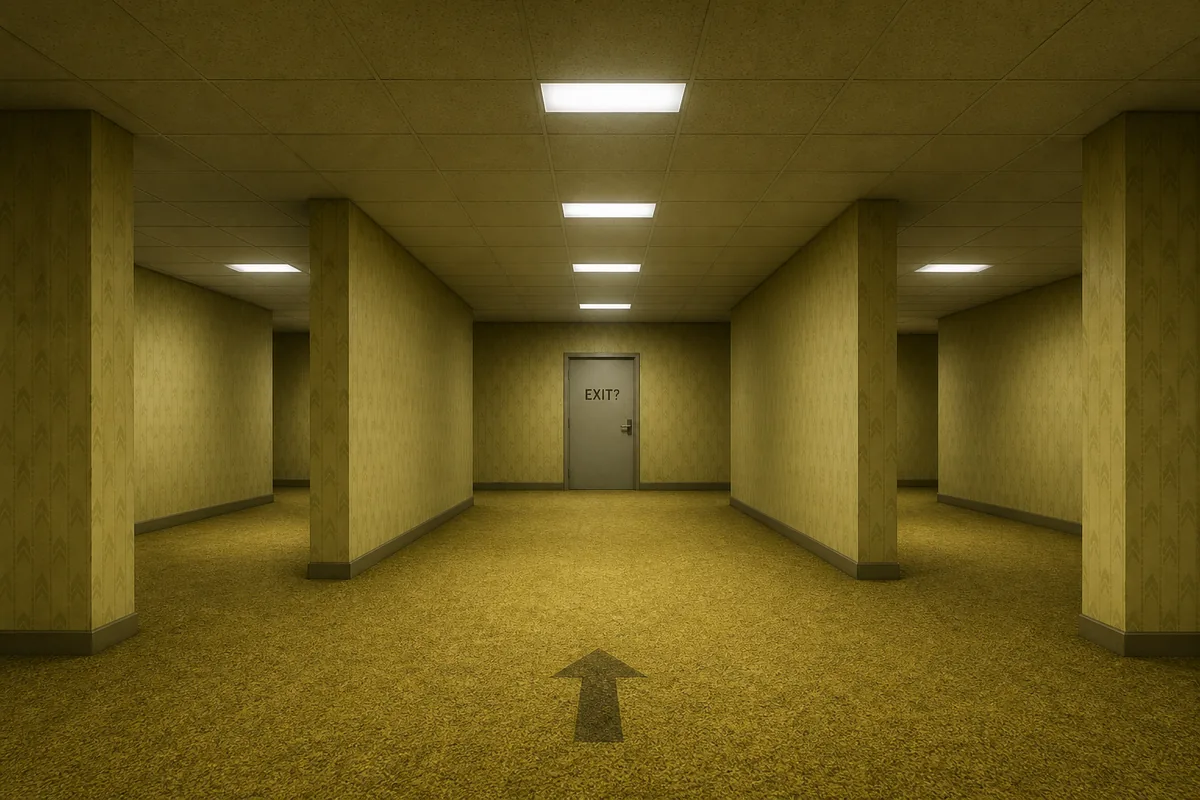
- Mark each branch by a visible cue: stain, turn, column, lamp gap, or door shape.
- Keep a short return path before exploring deeper rooms.
- Do not spend energy chasing every sound or light change.
- For games, confirm the current build before trusting old puzzle steps.
- For lore, keep each wiki or video continuity in its own notes.
Backrooms Level 0 entities, hazards, and survival rules
Searchers often ask whether Backrooms Level 0 has entities. The cautious answer is that entity presence depends on the source. Some versions emphasize isolation and disorientation more than direct pursuit. Others introduce entities, noises, footsteps, or game-specific chases to make Level 0 playable or scarier. A good guide should not merge those into one universal roster.
Even without a clear entity, Level 0 has hazards that matter: dehydration, fatigue, panic, repetitive architecture, poor sound direction, and false confidence. The room pattern can make people overestimate how much ground they have covered. Buzzing lights can mask movement or make it harder to listen. Empty corridors can encourage sprinting, which is often the fastest way to lose your return route.
Use behavior-first survival. If you hear movement, create distance before trying to identify a name. If the lights change, slow down and verify landmarks. If a door or object looks scripted, ask whether you are in a game route or a lore page. If a claim says Level 0 is safe, check whether it means safe from entities, safe from hostile humans, or simply safer than later levels.
| Signal | Safer response | Common mistake |
|---|---|---|
| Repeating hallways | Track physical cues and stop before memory blurs. | Running because every room looks the same. |
| Distant buzzing or footsteps | Keep distance and preserve two route options. | Approaching only to identify the entity. |
| A door appears after long wandering | Check whether your source calls it an exit, trap, or objective. | Assuming every door leaves Level 0. |
| Game puzzle items appear | Follow that game's current walkthrough or patch notes. | Applying the puzzle to wiki lore. |
Backrooms Level 0 exits and escape logic
The phrase 'how to escape Backrooms Level 0' has mixed intent. Some readers want a lore answer, some want a game walkthrough, and some want a simple beginner explanation. The honest answer is source-dependent. In broad Backrooms lore, exits are usually conditional, uncertain, or connected to nearby levels. In a game, escape may mean solving a room, finding a door, activating an elevator, or surviving a scripted path.
Before following any exit claim, ask three checks. Which source says it? Was the page or game build updated recently? Is the exit described as guaranteed, rumored, dangerous, or gameplay-only? Those questions are more useful than memorizing a copied exit list because the Backrooms is a collaborative setting with many branches.
A practical escape strategy is conservative. Do not abandon a known route for a suspicious door unless you can describe your way back. Do not split a team unless the game explicitly supports it. Do not treat a YouTube route or Roblox map as a Wikidot rule. Level 0 is easiest to understand when you separate 'where the story can go' from 'what this particular source lets you do.'
| Exit claim type | How to read it | Best action |
|---|---|---|
| Lore transition | A community page says Level 0 can lead elsewhere. | Name the source and avoid treating it as universal. |
| Game objective | A fixed route exists in one title or patch. | Use the current game version and official store context. |
| Video continuity | A creator's story implies a path or cut. | Treat it as that creator's version, not all Backrooms. |
| Rumored exit | The wording is uncertain or anecdotal. | Use it as lore flavor, not practical instruction. |
Wikidot, Fandom, games, and videos: how to verify Level 0
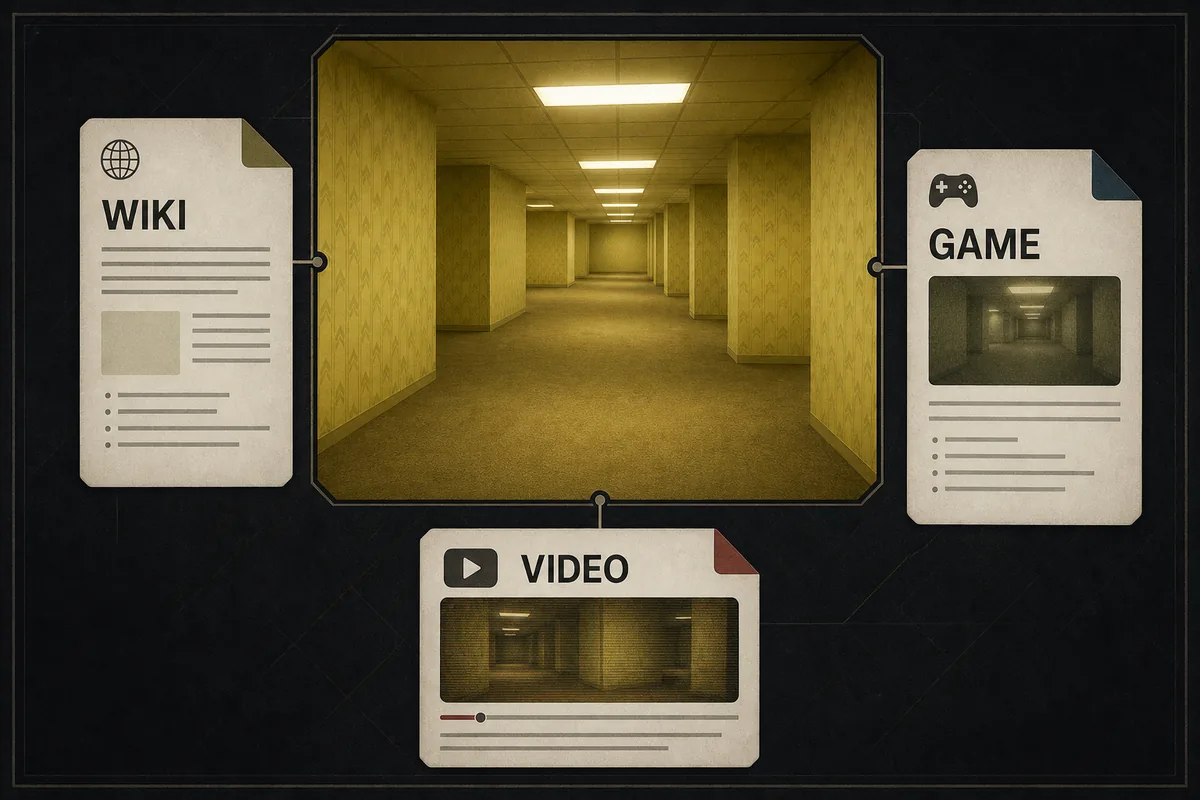
Backrooms Level 0 is famous enough that many pages summarize it, but fame creates a new problem: copied details often lose their source. If a guide says there are no entities, ask which version it means. If a walkthrough says to follow a sign, ask which game and build it is using. If a video shows a specific hallway, ask whether that hallway is part of a creator continuity rather than a shared map.
The safest editorial method is source labeling. Wikidot and Fandom are useful community references, but they are not always identical. Steam games and Roblox experiences are playable adaptations, so they can add mechanics that make good gameplay but poor universal lore. Kane Pixels-inspired material may shape visual expectations while following its own storytelling rules.
This site keeps Level 0 separate from the Backrooms Levels hub to avoid keyword cannibalization. The hub explains how levels work in general. This page focuses only on the yellow maze, source-specific exits, entity uncertainty, navigation mistakes, and practical reading order. Level 1 and Level 2 remain deeper route pages, while entity and game pages support specific questions.
Level 0 vs Level 1, Level 2, and game versions
Level 0 teaches the core Backrooms fear: you are in a familiar indoor space that no longer follows normal scale or certainty. Level 1 adds a more industrial Habitable Zone, Level 2 narrows the route into pipe-lined corridors, and game versions often convert these ideas into objectives, checkpoints, keys, or enemy timing. That progression is why a Level 0 page should answer beginner questions first instead of diving straight into deep-level lore.
If you are new, read Level 0 before Level 1 or Level 2. If you are searching because of a game, use this page for concept and source awareness, then check the game guide for co-op decisions. If you are writing or comparing Backrooms lore, keep each source family labeled. The yellow maze is shared visual language, not proof that every exit, entity, or route belongs to one canon.
A strong Backrooms Level 0 guide should leave you with three habits: describe what you can verify, avoid universal claims when sources differ, and treat navigation as the first survival problem. Those habits make the rest of the Backrooms easier to read, whether the next stop is the Habitable Zone, Pipe Dreams, a game level, or a movie-inspired interpretation.
| Page or source | Best for | Do not use it for |
|---|---|---|
| Backrooms Levels | Understanding level structure and future page order. | Detailed Level 0 route decisions. |
| Backrooms Level 1 | Habitable Zone layout, supplies, and early survival. | Yellow-maze entity or exit assumptions. |
| Backrooms Level 2 | Pipe Dreams hazards, industrial navigation, and exits. | Beginner Level 0 orientation. |
| Escape the Backrooms Guide | Co-op gameplay habits and game-source context. | Universal community canon. |
Backrooms Level 0 FAQ
What is Backrooms Level 0?
Backrooms Level 0 is the iconic yellow-room starting area with fluorescent lights, damp carpet, repeating halls, and uncertain exits. It is usually the first level readers learn before moving to Level 1 or Level 2.
Are there entities in Backrooms Level 0?
Entity presence depends on the source. Some versions emphasize isolation and navigation risk, while games and fan branches may add entities, noises, or scripted threats.
How do you escape Backrooms Level 0?
There is no single universal exit. A wiki may describe conditional transitions, while a game may use a door, elevator, key, or scripted objective. Match escape advice to the exact source.
Why is Backrooms Level 0 yellow?
The yellow wallpaper, fluorescent light, and damp-carpet look comes from the original liminal-office image that shaped the Backrooms idea. Later versions keep the visual language but alter the details.
Is Level 0 safer than Level 1 and Level 2?
It is often framed as less directly hostile than deeper levels, but it is not harmless. Disorientation, isolation, poor route discipline, and source-specific entity rules still matter.