
Backrooms Level 2 Guide: Pipe Dreams, Entities & Exits
Backrooms Level 2 is usually remembered as Pipe Dreams: a hot, industrial maze of service corridors, machinery noise, steam, wet floors, and pipe-lined walls. The quick answer is that Level 2 is more dangerous and less beginner-friendly than Level 1 because its routes are narrower, sound cues are harder to read, and entity claims change sharply between Wikidot lore, Fandom pages, and Backrooms games. Use this guide as a practical map of the intent, not as a single canon guarantee.
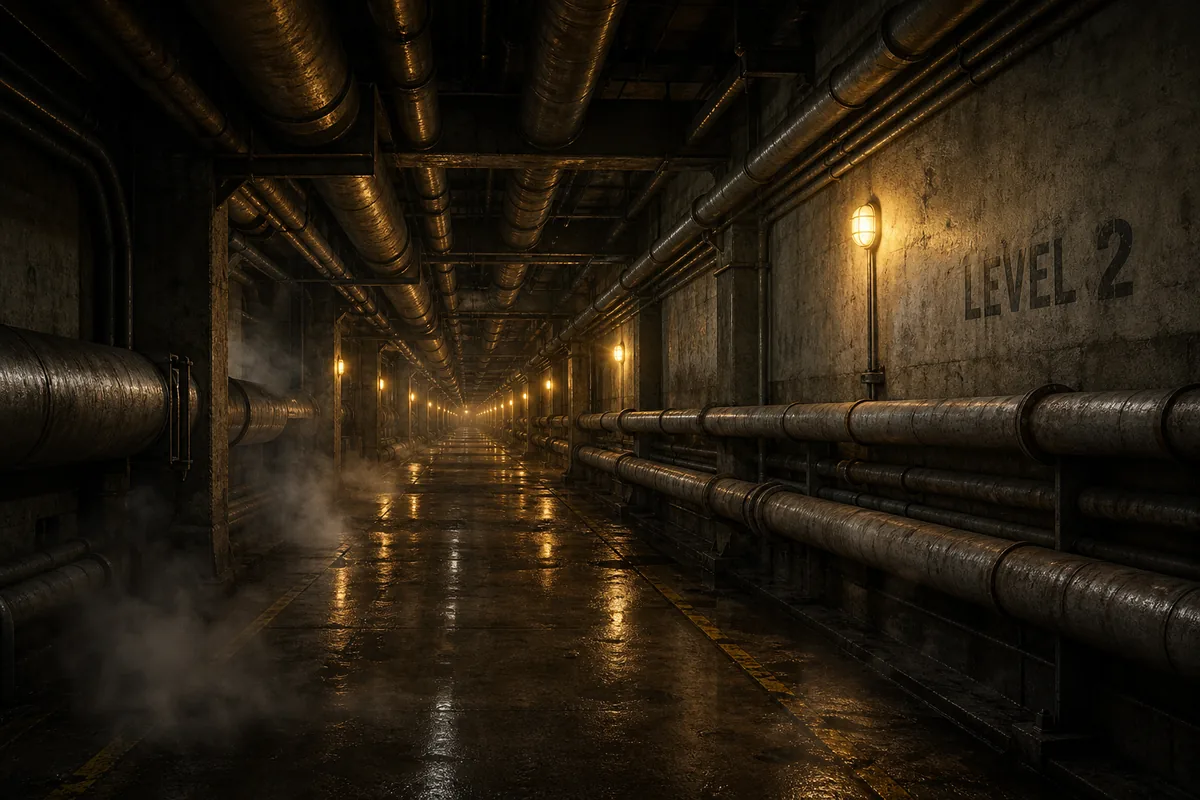
What is Backrooms Level 2?
Backrooms Level 2 is an early deep-level environment commonly described as a long industrial pipe system. Compared with Level 0's yellow maze or Level 1's warehouse-like Habitable Zone, Level 2 feels tighter, hotter, louder, and more mechanical. The most useful mental image is a service tunnel network where every pipe, door, valve, and steam leak can either help orientation or hide a risk.
Search results often mix several needs. Some readers want the community-lore page for Pipe Dreams. Others want a game route, a list of entities, or a simple explanation of how Level 2 connects to Level 1 and Level 3. Those are different tasks. A wiki article can describe uncertain entrances and exits, while a game walkthrough usually gives a fixed puzzle path or scripted chase. This page keeps those contexts separate.
The practical verdict is cautious: treat Level 2 as a hazard-first level. Do not assume that a lit corridor is safe, that every service door is an exit, or that a single entity list applies everywhere. Work from the source you are using, preserve a retreat path, and verify whether a detail comes from Wikidot, Fandom, a Steam game, Roblox, or a creator-specific continuity.
| Question | Short answer | What changes by source |
|---|---|---|
| Is Level 2 called Pipe Dreams? | Yes, that is the common community name. | Some games use the look without using the same lore rules. |
| Is Level 2 after Level 1? | Often, but not universally. | Entrances and exits differ by wiki, revision, and game. |
| Are there entities? | Most interpretations treat entity risk as serious. | Names, frequency, and behavior vary widely. |
| Can you follow a fixed map? | Only in a specific game or walkthrough. | Lore pages usually describe a broader environment, not one fixed route. |
How Pipe Dreams looks and how to navigate it
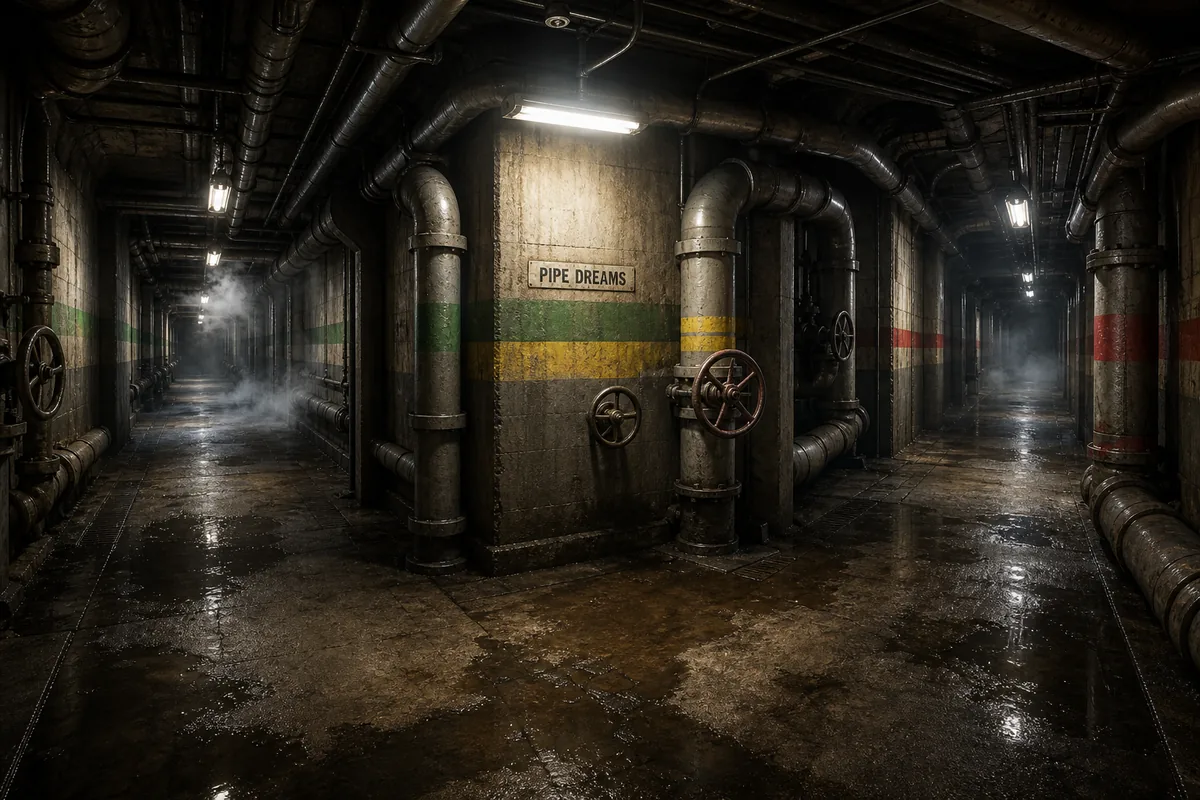
Level 2 is recognizable because the environment gives you many repeated industrial cues: pipe clusters, valve wheels, stained concrete, cable trays, warning stripes, damp floors, and flickering service lamps. That repetition is the trap. A corridor can look memorable for ten seconds, then become indistinguishable from the last five branches once steam, noise, and stress interfere.
Navigation should use persistent landmarks rather than mood. Mark pipe colors, valve shapes, door numbers, floor drains, pressure gauges, and any sound that stays in one place. If a corridor becomes hotter, louder, or more saturated with steam, treat that as a change in zone, not only atmosphere. A small return route is more valuable than an ambitious unverified shortcut.
For players, this is where lore and game logic split. In Escape the Backrooms or other co-op titles, a Level 2-like section may ask for keys, valves, codes, breakers, or a timed route. Those objectives are valid for that game build, but they are not universal Backrooms rules. Use the game UI and patch notes for gameplay, then use this guide for general recognition and survival decisions.
- Name each branch by a physical cue instead of a vague feeling.
- Do not enter a steam-heavy section until you know how to retreat.
- Keep group communication short: route, landmark, risk, next action.
- Separate game objectives from community-lore exits before giving advice.
- If your source changes, reset your assumptions about entities and exits.
Backrooms Level 2 entities, hazards, and survival rules
The safest way to read Backrooms Level 2 entity claims is behavior-first. Community pages and games may mention different rosters, but the danger pattern is consistent enough to be useful: narrow corridors limit escape options, machinery masks movement, steam blocks sight lines, and panic can turn one wrong turn into a chain of wrong turns.
If you hear motion through machinery noise, preserve distance before trying to identify the entity. If lights fail or the temperature rises sharply, stop treating the corridor as neutral. If a door, crate, or valve attracts attention, check the approaches before focusing on the object. Level 2 punishes tunnel vision more than slow progress.
Heat and noise matter as much as monsters. A long pipe corridor can exhaust players, hide footsteps, make voice calls harder, and encourage risky shortcuts. In co-op, distribute tasks so one player watches the approach while another checks an object. In lore reading, record which source names the entity rather than merging every list into a single canon.
| Signal | Safer response | Common mistake |
|---|---|---|
| Steam reduces visibility | Pause, listen, and keep the last clear landmark in sight. | Running forward because the corridor seems empty. |
| Machinery gets louder | Use hand signals or short voice calls and slow the group. | Letting the noise split the team. |
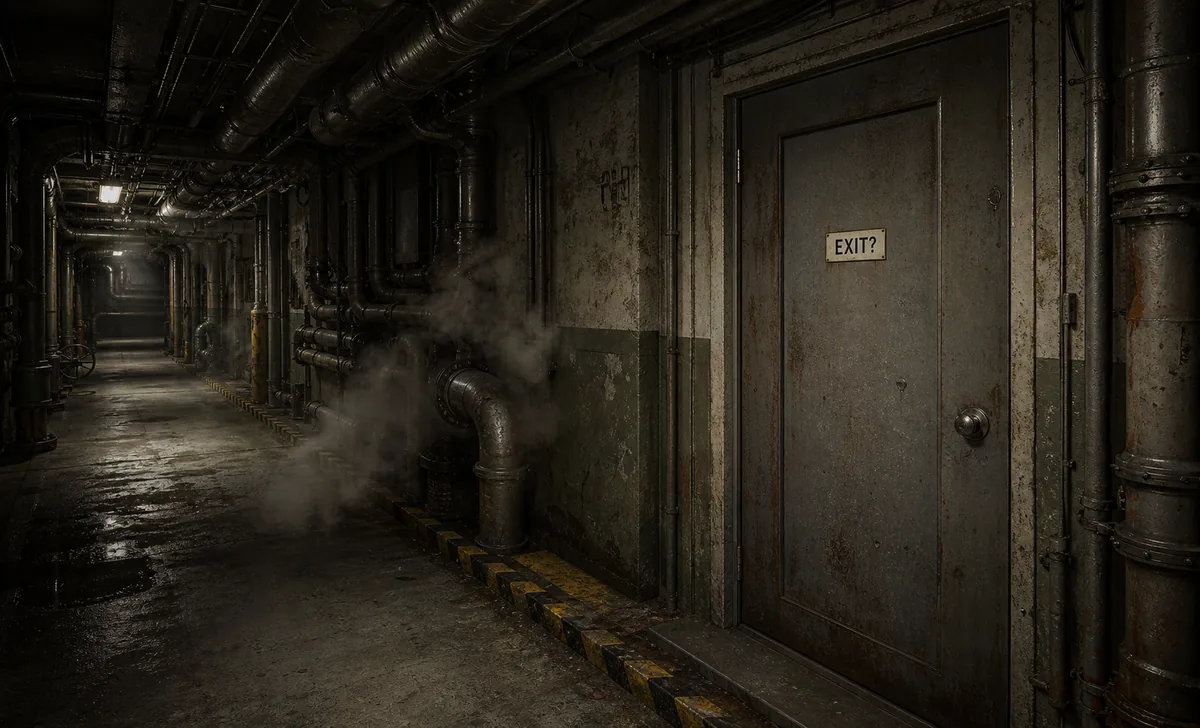
| A service door looks promising | Check whether the source calls it an exit, a trap, or a game objective. | Assuming every marked door progresses the level. |
| Movement appears ahead | Keep distance and preserve two route options. | Approaching only to identify the entity name. |
Backrooms Level 2 entrances and exits
Many readers search for Backrooms Level 2 exits because they want a simple path: where it starts, where it ends, and how to leave. The honest answer is source-dependent. Some community versions connect Level 2 with nearby early levels; games may convert that into a door, elevator, puzzle, or chase ending. A single list of exits is unreliable unless it names the canon or game.
Before following an entrance or exit claim, ask three questions: which site or game says it, when was that page or build updated, and is the route described as guaranteed, conditional, or rumored? This keeps the guide useful without flattening every continuity into one false map.
In gameplay, the best exit strategy is usually objective discipline: collect only needed items, track locked doors, regroup before transitions, and do not trigger scripted events while a teammate is behind. In lore, the best reading strategy is citation discipline: keep Wikidot, Fandom, Kane Pixels-inspired pages, and game-specific wikis separate.
- Record whether the exit claim is lore, game progression, or a creator-specific rule.
- Avoid mixing Level 2 routes from different wikis into one route table.
- In games, confirm all players are ready before activating doors, valves, or lifts.
- In lore guides, phrase uncertain transitions as source claims rather than facts.
Level 2 vs Level 1, Level 0, and game versions
Level 2 is best understood as the point where beginner Backrooms navigation becomes more technical. Level 0 teaches disorientation, Level 1 introduces supplies and industrial spaces, and Level 2 turns infrastructure itself into the hazard. The environment is not only strange; it is restrictive. Pipes reduce sight lines, noise reduces certainty, and doors become decisions rather than decoration.
That difference helps prevent keyword cannibalization on this site. The Backrooms Levels page remains the index for all levels. The Backrooms Level 1 guide explains the Habitable Zone. This page focuses only on Pipe Dreams: layout recognition, entity-risk handling, source-specific exits, and how to read Level 2 claims without mixing incompatible canons.
For game searches, use this page as a concept guide and the Escape the Backrooms guide for co-op methods. When a walkthrough says 'Level 2,' confirm whether it means a named Backrooms lore level, a level number inside a specific title, or a fan-made map. The wording may match while the task is completely different.
| Page or source | Best for | Do not use it for |
|---|---|---|
| Backrooms Levels | Choosing which level guide to read next. | Detailed Pipe Dreams route decisions. |
| Backrooms Level 1 | Habitable Zone layout, supplies, and early survival. | Level 2 heat, pipes, and exit claims. |
| Escape the Backrooms Guide | Co-op gameplay habits and game-source context. | Universal community-lore canon. |
| This Level 2 guide | Pipe Dreams recognition, hazards, exits, and context. | Claiming one official map for every source. |
How to verify a Backrooms Level 2 claim
Backrooms content is collaborative and fragmented, so verification means source clarity rather than pretending there is one central authority. If a claim affects a route, entity, or exit, name the page family first. Wikidot lore, Fandom pages, Steam games, Roblox experiences, YouTube interpretations, and private fan wikis can all use the same level number with different rules.
Use a simple test: if the claim tells you what an entity does, check whether that exact behavior appears in the source. If it tells you where an exit leads, check whether the source describes it as certain or only possible. If it tells you how to beat a level, check the current game build or platform page. This habit prevents outdated advice from sounding more certain than it is.
For this site's future pages, Level 0 and Level 3 would be natural follow-ups because they sit next to Level 2 in many reader journeys. Entity-specific pages can also support this guide, but they should not replace source notes. A useful Backrooms guide is clear about what it knows, where it comes from, and where the reader should verify a version-specific detail.
Backrooms Level 2 FAQ
What entities are in Level 2 of the Backrooms?
Entity lists depend on the source. Many Level 2 interpretations treat entities as a serious risk, but names and behavior vary between Wikidot, Fandom, games, and creator-specific continuities. Use behavior-first survival and verify the source before treating a roster as universal.
Is Backrooms Level 2 called Pipe Dreams?
Yes. Pipe Dreams is the common name associated with Backrooms Level 2, especially in community-lore searches. Some games use similar industrial pipe imagery without following the same lore rules.
How do you escape Backrooms Level 2?
There is no single universal exit. A lore page may describe source-specific transitions, while a game may require a door, valve, key, elevator, or scripted objective. Always match the exit advice to the wiki, game, or build you are using.
Is Level 2 harder than Level 1?
Usually yes for practical navigation. Level 2 is narrower, hotter, noisier, and more route-constrained than Level 1. It also has less room for error when visibility drops or an entity blocks a corridor.
Should Level 2 details be used for Escape the Backrooms?
Use them only as background. For actual gameplay, follow the current Escape the Backrooms build, official Steam information, and game-specific walkthroughs, because puzzle order and entity behavior can change with updates.