
Backrooms Level 1 Guide: Entities, Exits & Survival
Backrooms Level 1 is usually described as a vast concrete warehouse called the Habitable Zone. It is more resource-rich than Level 0, but darkness, unreliable lights, isolated corridors, and canon-specific entities make it unsafe. This guide gives the quick answer first, then separates community lore from game objectives so you can use the right rules.
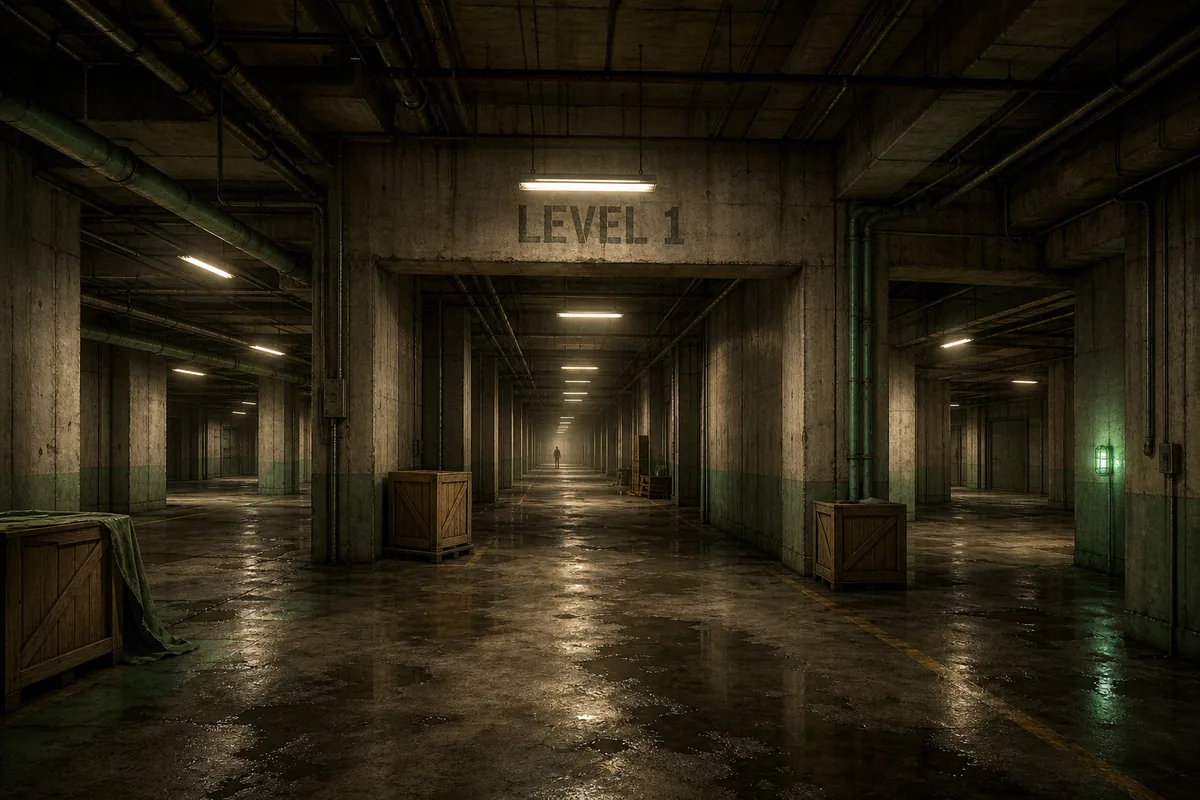
What is Backrooms Level 1?
Backrooms Level 1 is an early survival environment that commonly follows Level 0. In the Wikidot tradition it is known as the Habitable Zone: an enormous complex of concrete halls, service corridors, loading areas, damp floors, exposed pipes, and industrial lighting. It feels more structured than the yellow maze, and supplies or settlements may exist in some versions, but the name does not mean the level is safe.
The important distinction is source context. The Wikidot level, the Fandom interpretation, Kane Pixels videos, Escape the Backrooms, Inside the Backrooms, Roblox experiences, and independent games do not share one rulebook. A game may turn Level 1 into a fixed puzzle route, while a community wiki can describe an open environment with settlements, crates, entities, entrances, and exits. Treat shared visual ideas as a starting point, then check the source you are actually using.
For a beginner, the practical summary is simple: stay oriented, do not assume every lit area is safe, inspect supplies before depending on them, and avoid treating a remembered walkthrough as universal lore. Level 1 rewards careful navigation more than speed.
| Question | Short answer | What can change |
|---|---|---|
| Is Level 1 habitable? | Some versions contain supplies and communities. | Settlement names, safety, and permanence vary. |
| Are there entities? | Many versions describe entity risk, especially in dark sectors. | Type, frequency, and behavior differ by canon or game. |
| Can you map it? | You can map a local route, not necessarily the whole level. | Procedural or scripted games may use fixed objectives. |
| Is it after Level 0? | It is a common early destination in wiki and game structures. | Entrances are not universal across every continuity. |
How Level 1 looks and how to navigate it
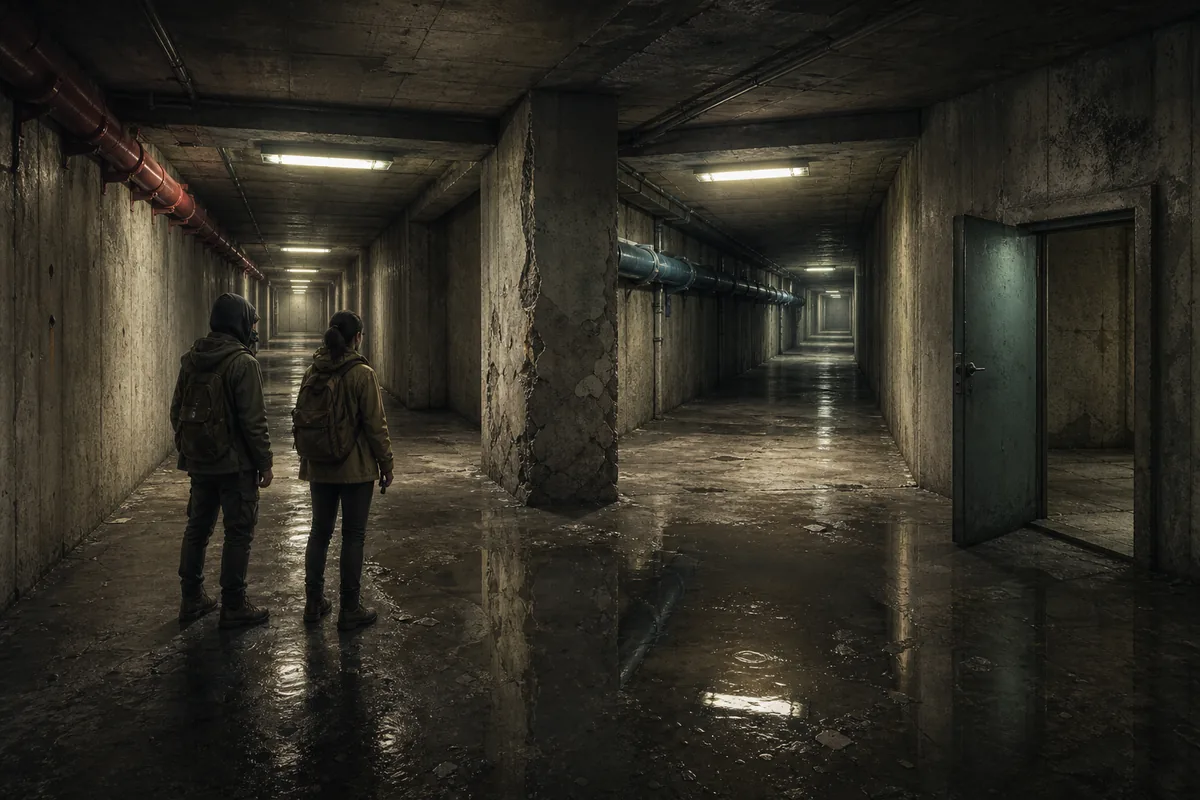
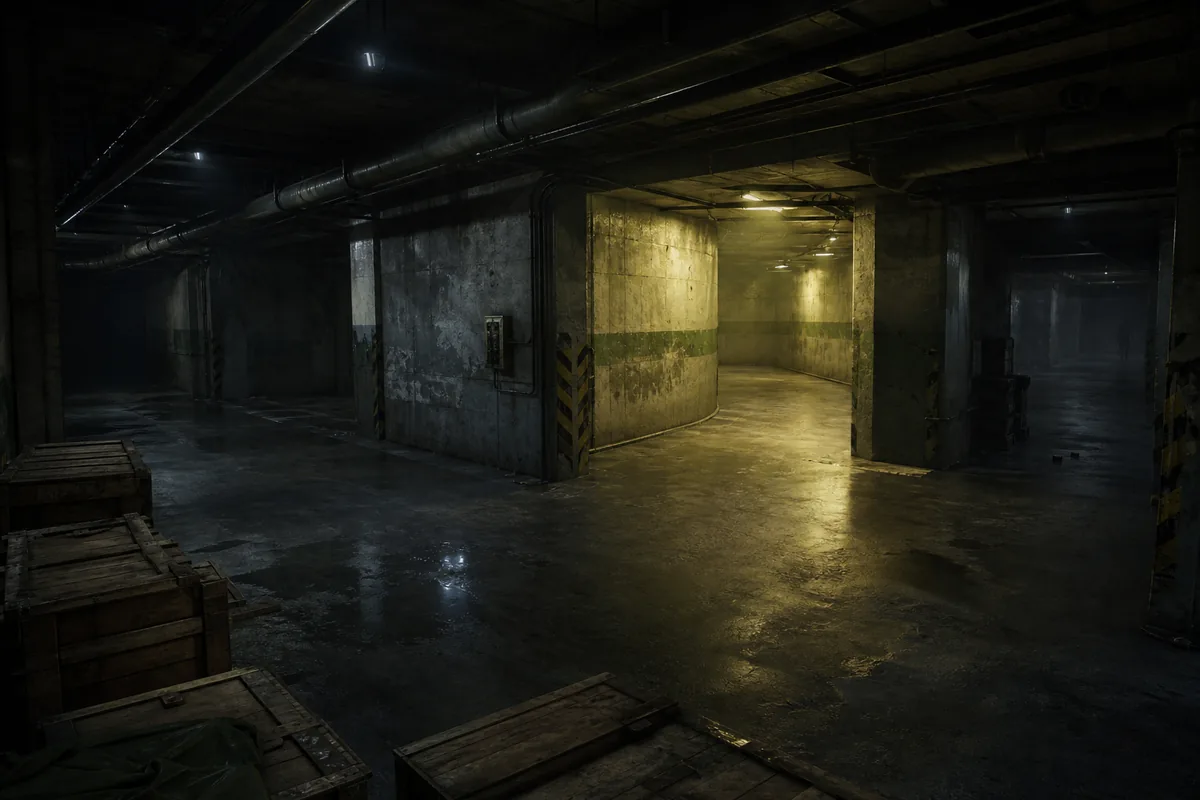
The most recognizable Level 1 spaces use unfinished concrete, low ceilings, pipes, pillars, metal doors, puddles, storage zones, and long fluorescent rows. Sight lines can be deceptive: two corridors may look identical even when they lead to different sectors. Light can also create false confidence. A bright loading bay may offer visibility, while a flickering transition can hide a dead end or threat.
Use local landmarks instead of trying to memorize an imagined global map. Record pipe colors, door markings, damaged lights, unusual floor texture, crate clusters, and the direction of any persistent sound. At intersections, choose a repeatable marking method and preserve a return route. Random wandering turns one navigation error into several, especially after a light failure.
In co-op games, route discipline matters more than lore accuracy. Keep teammates within voice range, name intersections consistently, and decide who tracks objectives. If a title uses checkpoints, keys, valves, ladders, or coded doors, those are game systems rather than universal Level 1 facts. The broader lesson still transfers: communicate before splitting and verify that a doorway remains usable from both sides.
- Choose one landmark system before moving deeper.
- Keep a known retreat path and recheck it after doors or lights change.
- Treat unfamiliar sounds as information, not a reason to sprint blindly.
- In multiplayer, use short intersection names and confirm them aloud.
- Separate game objectives from community-lore entrances and exits.
Level 1 entities, hazards, and survival rules
Entity lists are the least portable part of a Backrooms guide. Community versions often associate darker Level 1 sectors with Hounds, Facelings, Skin-Stealers, Dullers, or other threats, but the roster changes across revisions and sites. Games make even larger changes for pacing: they may place a named creature in a scripted room, remove wiki entities, or turn a general hazard into a chase sequence.
Use behavior-first survival. If lighting drops, reduce noise and avoid committing to a corridor you have not checked. If you see movement, preserve distance and an exit instead of moving closer to identify a name. If you find a crate or unattended supply, examine the surrounding route before focusing on the object. A useful resource can also be a place where attention narrows and escape options disappear.
Environmental hazards deserve equal attention. Standing water can conceal uneven flooring, machinery can mask footsteps, repeated concrete rooms can cause route fatigue, and long quiet stretches can encourage careless speed. Rest only where you can watch more than one approach. Keep essential supplies distributed rather than placing everything in one bag or with one player.
| Signal | Safer response | Common mistake |
|---|---|---|
| Lights begin flickering | Slow down, identify retreat points, and reduce noise. | Sprinting into an unverified dark branch. |
| Unclear movement ahead | Maintain distance and keep two route options open. | Approaching only to identify the entity. |
| Crates or supplies appear | Check exits and surroundings before searching. | Letting the whole group focus on one object. |
| The group loses orientation | Return to the last confirmed landmark. | Creating a new route while already uncertain. |
Backrooms Level 1 entrances and exits
A common community-lore route places Level 1 after Level 0, but the exact transition depends on the source. Wiki pages may describe noclipping, doors, passageways, or specific connections to other levels. A game usually replaces that uncertainty with an objective sequence: find an item, follow a marked route, complete a puzzle, reach a door, or survive a chase.
Do not combine entrance lists from different canons into one guaranteed map. Before following an exit claim, note the page, game, and revision it came from. If a route says that a particular door leads to another level, verify whether it describes Wikidot lore, Fandom lore, a Steam title, a Roblox game, or a creator's private continuity. Similar names do not prove identical behavior.
For practical play, identify the win condition before exploring optional branches. In a puzzle game, preserve found keys and keep track of locked doors. In a co-op survival title, confirm that all players are ready before triggering a transition. In community lore, read entrances and exits as part of that page's fiction, not real-world safety instructions.
- Name the canon or game before listing an entrance or exit.
- Verify whether an exit is guaranteed, conditional, or only rumored in that source.
- In games, distinguish progression objectives from optional lore rooms.
- In co-op, regroup before activating doors, lifts, or scripted transitions.
Level 1 lore vs Escape the Backrooms gameplay
Searches for Backrooms Level 1 often mix two intentions: readers want the Habitable Zone lore, while players want to beat a playable level. Those jobs overlap but are not interchangeable. A lore page explains environment, communities, resources, entities, and connections. A walkthrough explains the current game's layout, puzzle order, items, checkpoints, and scripted threats.
Escape the Backrooms is an official Steam product page, but its use of Backrooms ideas does not make its layout the official version of community lore. Updates can also alter game routes. This page therefore provides stable recognition and decision principles, then sends players to the dedicated Escape the Backrooms guide for game-specific strategy. The broad Backrooms Levels page remains the index for comparing Level 1 with other environments.
This separation prevents two common errors: telling a lore reader to search for a game-only key, or telling a player that a wiki exit must exist in the current build. When details conflict, the source closest to the reader's task wins: the current game build for gameplay, the named wiki revision for that community canon, and creator material for a creator-specific continuity.
| Need | Best source | Use this page for |
|---|---|---|
| Habitable Zone lore | The named community wiki and its revision history. | Quick context, hazards, and source boundaries. |
| Escape the Backrooms objective | The current game build and official Steam information. | Transferable navigation and co-op principles. |
| Entity behavior | The exact game or canon where the entity appears. | Behavior-first risk assessment. |
| Connections to other levels | The source page that states the entrance or exit. | A reminder not to merge incompatible maps. |
How to verify a Level 1 claim
Start by identifying the source family in the title, URL, or game menu. Then check whether the claim is environmental, narrative, or mechanical. Concrete halls are a broad visual convention; a named settlement is a canon-specific narrative detail; a key location is a game mechanic. Those three claims need different evidence.
Check dates or revision history when a route matters. Community pages can be rewritten, and game guides can become stale after updates. Prefer the current Wikidot Level 1 page for claims explicitly attributed to that wiki and the official Steam listing for product identity and platform facts. Community comments, videos, and discussions can demonstrate player experience, but they should not be labeled official.
Finally, keep uncertainty visible. Saying that an entity may appear in some versions is more accurate than building one universal roster. Saying that an exit belongs to a named canon is more useful than presenting it as a guaranteed rule. The Backrooms works through adaptation; a trustworthy guide helps readers choose the right continuity instead of hiding the differences.
Backrooms Level 1 FAQ
What is Backrooms Level 1 called?
In the Wikidot community tradition, Level 1 is commonly called the Habitable Zone, an industrial complex of concrete halls, corridors, and storage areas.
Is Backrooms Level 1 safe?
No. Some versions describe supplies and communities, but darkness, isolation, environmental hazards, and canon-specific entities still create risk.
What entities are in Backrooms Level 1?
The roster depends on the wiki, revision, or game. Some community versions mention threats such as Hounds or Facelings, while games may use a different scripted set.
How do you escape Backrooms Level 1?
There is no universal exit. Community wikis and games define different doors, passages, objectives, and transitions, so verify the exact source before following a route.
How big is Backrooms Level 1?
Community lore usually presents it as extremely large or effectively unmappable as a whole. A game may use a much smaller fixed level for progression.
Is Escape the Backrooms Level 1 the same as wiki Level 1?
No. The game adapts familiar ideas into a playable route with its own objectives, item placement, and encounters; it should not be treated as a universal wiki map.