
Backrooms Level 3 Guide: Electrical Station, Entities & Exits
Backrooms Level 3 is commonly identified as Electrical Station: a large industrial environment of concrete rooms, switchgear, cable runs, machinery, and long service corridors. The useful short answer is that Level 3 is not one universal walkthrough. Its room details, entities, entrances, and exits depend on the wiki, game, video continuity, or fan branch being described. This guide starts with the directly checked Wikidot source, then separates source-based lore from game-specific advice so a search for Level 3 does not become a pile of incompatible maps.
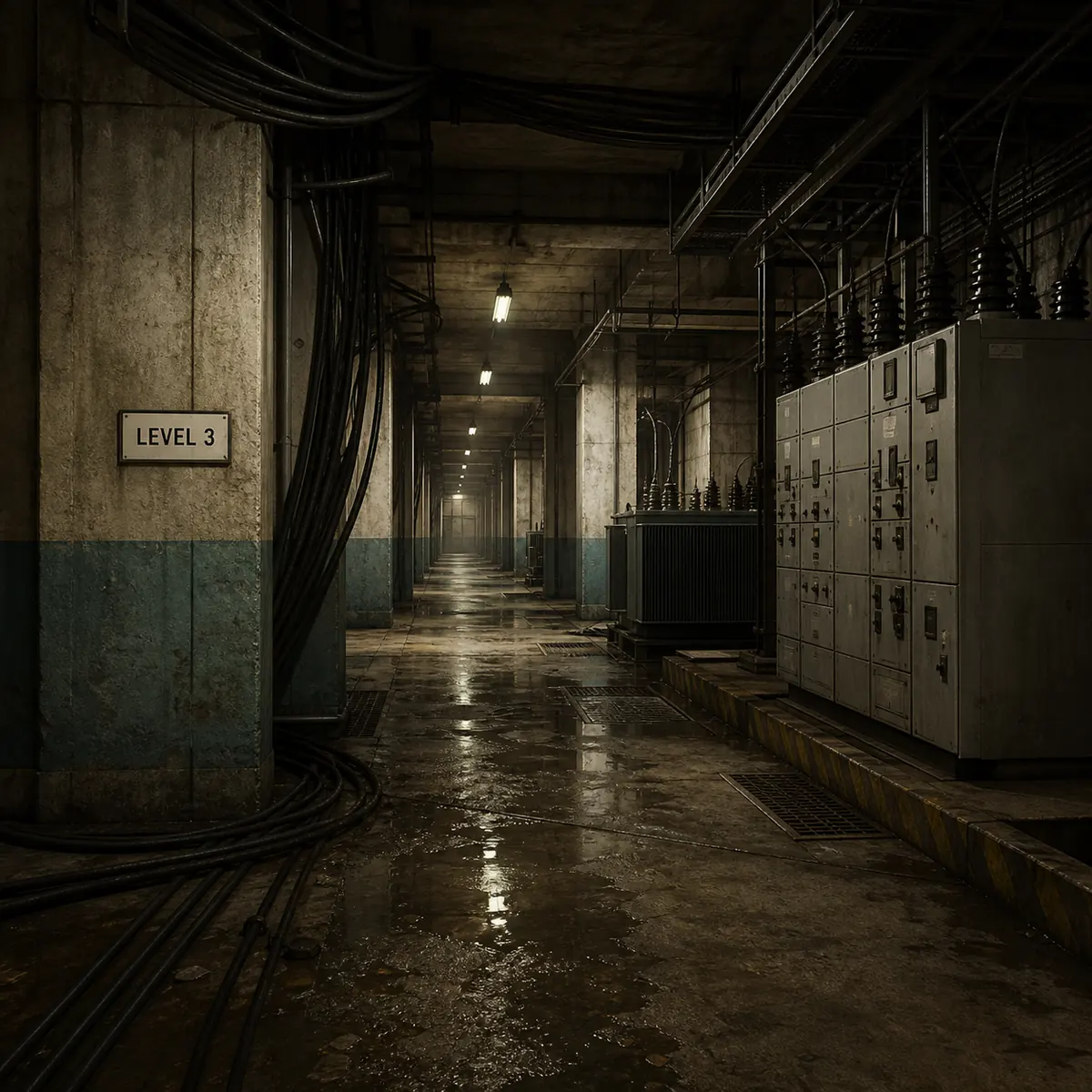
What is Backrooms Level 3?
Backrooms Level 3 is an industrial level that the checked Wikidot article calls Electrical Station. Instead of the yellow repetition of Level 0 or the warmer pipe maze associated with Level 2, this setting is built around electrical infrastructure: service rooms, concrete passages, transformers, switchboards, cables, lights, and machinery that can make distance difficult to judge.
That name is a useful anchor, not a promise that every Backrooms page uses identical canon. Community wikis, creator continuities, Roblox experiences, and Steam games may borrow the number while changing the environment or objective. When a result says Level 3, first ask whether it means lore, a game level, or a fan-made branch.
For a reader who wants the practical takeaway, treat the level as a place where route memory matters more than speed. Keep visible landmarks, record the source of an exit claim, and do not assume that an illuminated door or a familiar entity behaves the same way in another version.
| Question | Short answer | What can change |
|---|---|---|
| What is Level 3 called? | Electrical Station in the checked Wikidot source. | Other wikis and games may use a different label. |
| What does it look like? | Industrial rooms, equipment, cables, and service corridors. | Room order, lighting, and scale depend on the source. |
| Is there one map? | No universal map should be assumed. | A game may turn exploration into a fixed objective route. |
| Are entities guaranteed? | Only when the named source says so. | Names and behavior vary across lore and adaptations. |
What does the Electrical Station look like?
The strongest visual cue is infrastructure rather than decoration. Look for concrete walls, electrical cabinets, thick cable bundles, service lights, equipment rooms, damp floors, vents, and corridors that repeat similar geometry. These details make the level recognizable, but they also make navigation difficult because a familiar wall or cabinet can appear in more than one route.
A good route note records a landmark and its relationship to the next decision. For example, do not write only “a long corridor.” Write “green-painted pillar, cable tray overhead, two locked cabinets on the right, service door at the far end.” That description remains useful when a screenshot, wiki paragraph, or game build uses a slightly different layout.
Electrical Station searches often mix a lore description with a player asking what to do next. The environment answer belongs here; a puzzle sequence belongs to the named game guide. Keeping those answers separate prevents a game mechanic from being mistaken for a universal Level 3 exit.
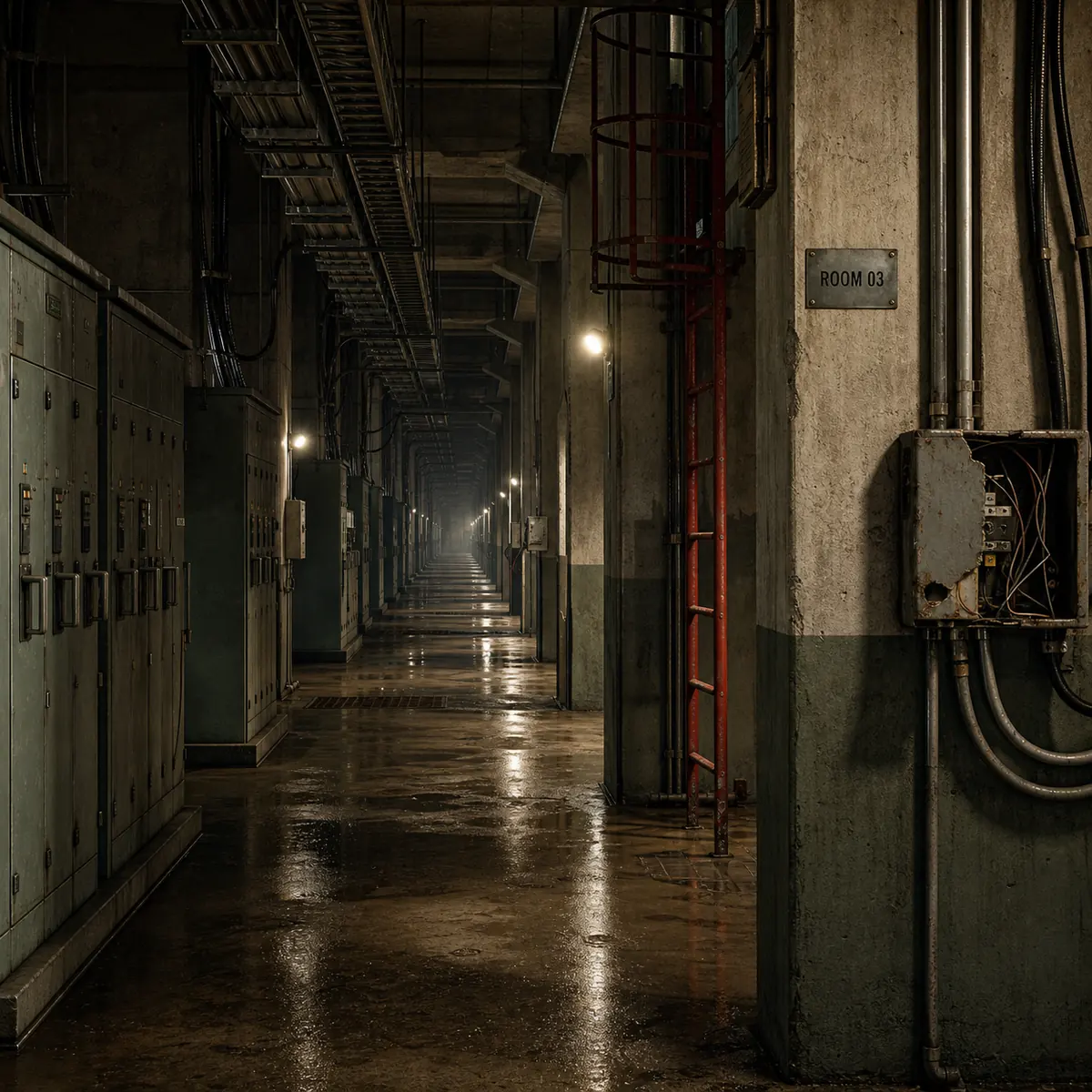
- Name landmarks by color, shape, equipment, and relative position.
- Keep one route note for the way back before entering a similar-looking branch.
- Use light, sound, doors, and floor markings as clues, not as guaranteed promises.
- In co-op play, say the landmark first, then the direction and next action.
- Record whether the description comes from Wikidot, Fandom, a game, or a creator continuity.
Entities, anomalies, and Level 3 survival decisions
Searches for Backrooms Level 3 entities are difficult because an entity list can be copied from a different level, wiki, or game. The safer editorial rule is to name the source before naming the threat. If the source does not establish a behavior, phrase it as an interpretation or a possibility instead of a universal rule.
The environment itself creates risk even before an entity appears. Machinery can mask footsteps, wet floors can slow movement, repeated rooms can break route memory, and poor lighting can make a doorway look closer than it is. These are useful survival considerations across many versions, but they are not a substitute for a current game walkthrough.
When a threat is reported, make the decision in this order: preserve distance, identify a return route, check whether the behavior belongs to this source, and only then choose whether to move, hide, or interact. In a game, follow the current build and objective. In lore, keep the claim tied to the page that made it.
| Signal | Practical response | Boundary |
|---|---|---|
| Machinery or electrical noise | Pause, listen for a route change, and keep a landmark in view. | Sound behavior may be a game mechanic or a source detail. |
| Repeated rooms or cabinets | Use a short written landmark note instead of guessing direction. | A fixed map only applies to the named version. |
| An entity claim without a source | Treat it as unverified until the wiki, game, or video is named. | Do not merge every entity roster into one canon. |
| A blocked or lit door | Check the source and preserve a fallback route. | A door is not automatically an exit. |
Backrooms Level 3 entrances and exits
The phrase “how to escape Backrooms Level 3” sounds like it should have one answer, but the source determines what an exit means. The checked Wikidot page has dedicated entrances and exits sections. A game may replace those open-ended transitions with a key, elevator, puzzle, checkpoint, or scripted door. A video continuity may use a completely different rule.
Before following an exit claim, label it as confirmed, conditional, rumored, or game-specific. Also record the page or title, the platform or build when relevant, and the date you checked it. This is more reliable than copying a short route from a post that has silently mixed Level 3 lore with a playable adaptation.
If a door looks like progress, do not let the label do the thinking. Check the surrounding landmarks, keep the route behind you readable, and match the advice to the source. That method answers the informational intent without pretending that one community map controls every Backrooms version.
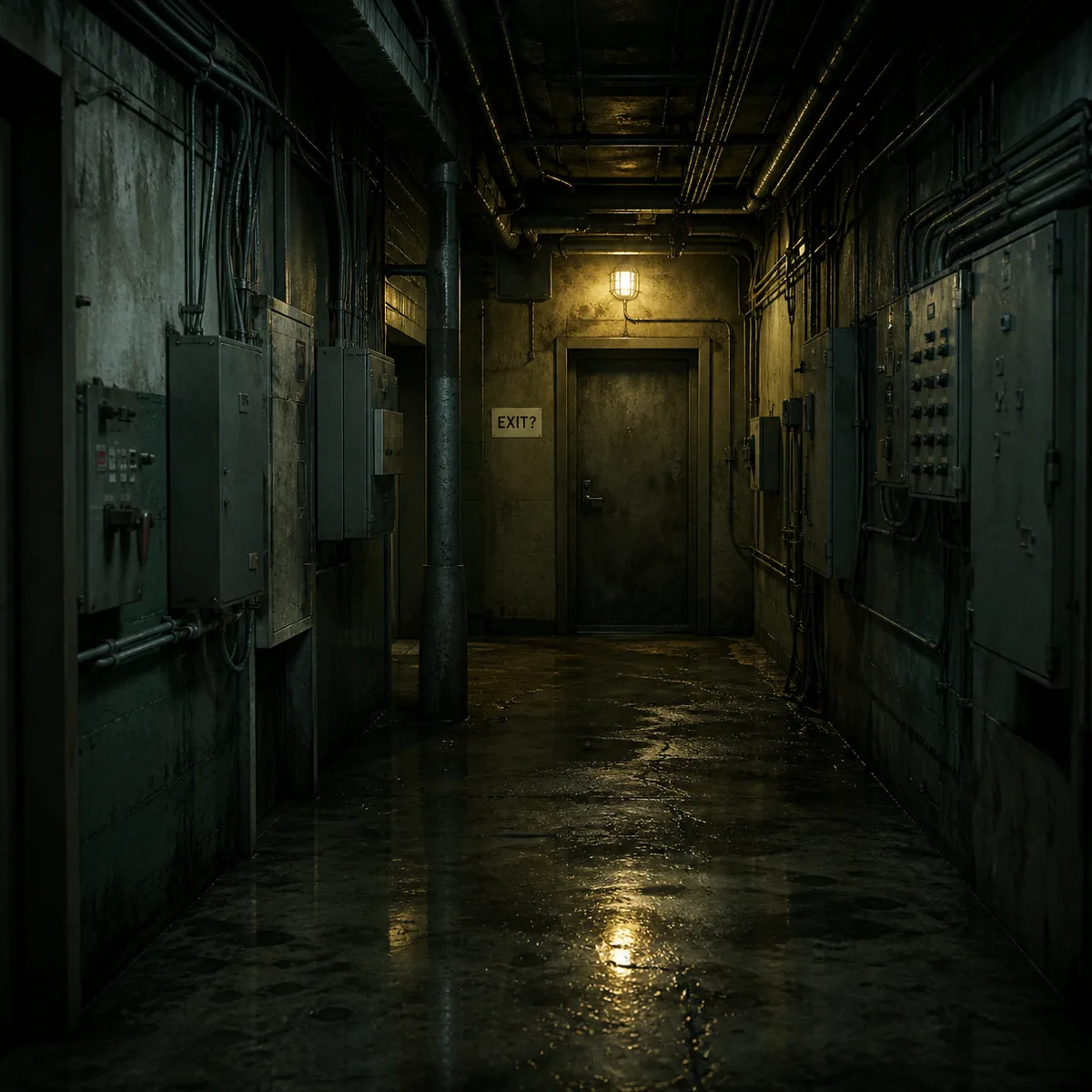
- Name the wiki, game, video, or fan branch behind the entrance or exit claim.
- Separate a lore transition from a door, puzzle, or checkpoint in a game.
- Treat uncertain wording as uncertain; do not turn “possible” into “guaranteed.”
- Keep the previous landmark and one fallback route before testing a transition.
Level 3 compared with Level 2, Level 4, and games
Level 3 earns its own page because it answers a different question from the level hub and the Level 2 guide. The hub helps readers choose a level. Level 2 focuses on Pipe Dreams and its pipe-lined industrial hazards. Level 3 focuses on Electrical Station, equipment-heavy rooms, route landmarks, and source-specific transitions.
Level 4 is a useful neighboring search but should not be blended into this page. The directly checked Wikidot Level 4 page is titled Abandoned Office and is marked as being rewritten. That is a reason to qualify future Level 4 claims, not a reason to fill the Level 3 page with a second level's details.
Games create a third boundary. A title may call a chapter Level 3 while using a completely different environment, monster roster, or puzzle order. Use this guide for recognition and source context, then move to the game guide when the reader needs a fixed objective sequence.
| Page or source | Best for | Do not use it for |
|---|---|---|
| Backrooms Levels | Choosing a level and comparing broad fields. | Detailed Electrical Station route decisions. |
| Backrooms Level 2 | Pipe Dreams, pipes, heat, and source-aware exits. | Universal Level 3 rooms or mechanics. |
| This Level 3 guide | Electrical Station recognition, risks, exits, and canon boundaries. | A guaranteed walkthrough for every game. |
| Escape the Backrooms guide | Co-op habits and game-specific route context. | A universal lore canon. |
How to verify a Backrooms Level 3 claim
Start with the source title, not only the number. The checked Wikidot page identifies Level 3 as Electrical Station and organizes its information around description, rooms, anomalies, communities, and entrances and exits. That structure is useful because it keeps environment facts separate from interpretation and transition claims.
Use community pages as context, not as proof that every version agrees. If a Fandom page, video, Roblox experience, or Steam game uses different names or mechanics, write the difference next to the claim. For a game route, confirm the title and current build. For lore, keep the wiki and page revision identifiable.
A reliable Level 3 guide is therefore less about promising a secret shortcut and more about giving the reader a repeatable check: identify the source, locate the claim, decide whether it is certain or conditional, and avoid exporting a game rule into the wider Backrooms setting.
Backrooms Level 3 FAQ
Is Backrooms Level 3 called Electrical Station?
The directly checked Wikidot Level 3 page is titled Electrical Station, so it is a useful source name for this guide. Other wikis, games, videos, and fan branches may use a different label or a different version of the environment.
What does Backrooms Level 3 look like?
The common source description centers on industrial rooms, concrete passages, electrical equipment, cables, lights, and service corridors. The exact room order, lighting, and scale should be attributed to the source being used.
How do you escape Backrooms Level 3?
There is no universal escape route. Check the named lore source or the current game title and build. A game may require a door, puzzle, elevator, checkpoint, or scripted objective that does not exist in the wider lore.
What entities are in Backrooms Level 3?
Entity lists are source-dependent. Verify the wiki, game, video, or fan branch before treating a name or behavior as universal, and use the current game guide for mechanics.
How do you beat Level 3 in Escape the Backrooms?
Use a current game-specific walkthrough for exact objectives. This page provides Electrical Station and source context, but it does not claim that lore exits or entity rules are the same as a particular game build.
Is Level 3 harder than Level 2?
There is no universal difficulty ranking across every canon. Level 3 can feel more demanding because equipment, repeated rooms, noise, and route ambiguity make navigation harder, while a game may assign its own pacing and threat level.