
Backrooms Level 5 Guide: Terror Hotel, Rooms & Exits
Backrooms Level 5 is commonly known as the Terror Hotel: an ornate, unsettling hotel environment built from repeating halls, rooms, service passages, and deeper industrial spaces. The quick answer is that Level 5 is not one universal map. The Wikidot version, Fandom summaries, videos, and games can share the hotel idea while changing entities, room rules, entrances, and exits. This guide keeps those versions separate so you can read the lore without mistaking a game route for a canon rule.
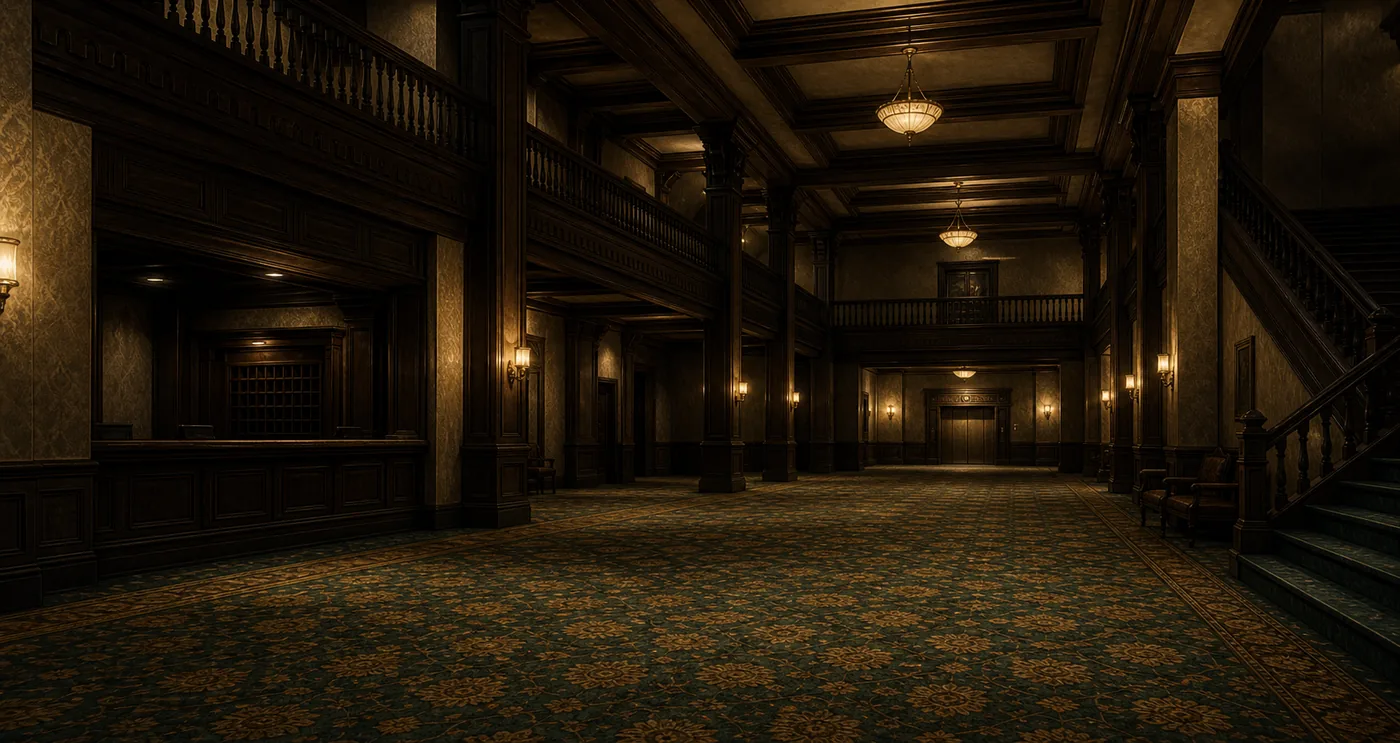
What is Backrooms Level 5?
Backrooms Level 5 is the hotel level most often associated with the name Terror Hotel. Its recognizable identity comes from the contrast between a grand, familiar building and the fact that the building does not behave like a normal hotel. Long halls, repeated doors, ornate public rooms, maintenance routes, and locked or uncertain spaces turn a place designed for guests into a navigation problem.
The Wikidot Level 5 article uses named areas such as the Main Hall, the Beverly Room, and the Boiler Room. Those names are useful anchors for understanding the source, but they should not be treated as a universal map for every Backrooms story. Other community pages, videos, roleplay settings, and games may reuse the hotel premise while changing the room layout, entity behavior, danger class, or exit logic.
For a practical reading order, identify the source first, then separate environment facts from interpretation. A room described by a community wiki is lore context. A key, elevator, chase, or puzzle in a game is a gameplay mechanic. The same hotel image can support both, but the correct answer to an exit or entity question depends on which version the reader means.
| Question | Short answer | What can change by source |
|---|---|---|
| What is Level 5 called? | Terror Hotel is the common nickname. | The name and room list can differ in fan branches and games. |
| Is Level 5 a normal hotel? | No. The hotel setting is a liminal, source-dependent environment. | Layout, access rules, time, and hazards are not universal. |
| Are entities guaranteed? | Do not assume a single universal roster. | Entity presence and behavior depend on the continuity. |
| Does Level 5 have one exit? | There is no cross-source exit route to memorize. | Lore transitions and game objectives may use different rules. |
Terror Hotel rooms and zones
The hotel is easier to understand when it is read as a group of zones rather than one decorative hallway. Public areas create a false sense of safety because their carpet, chandeliers, desks, and elevators look familiar. Service corridors and restricted rooms change the scale and sound of the environment. A reader or player should ask which zone is being described before applying a danger claim to the whole level.
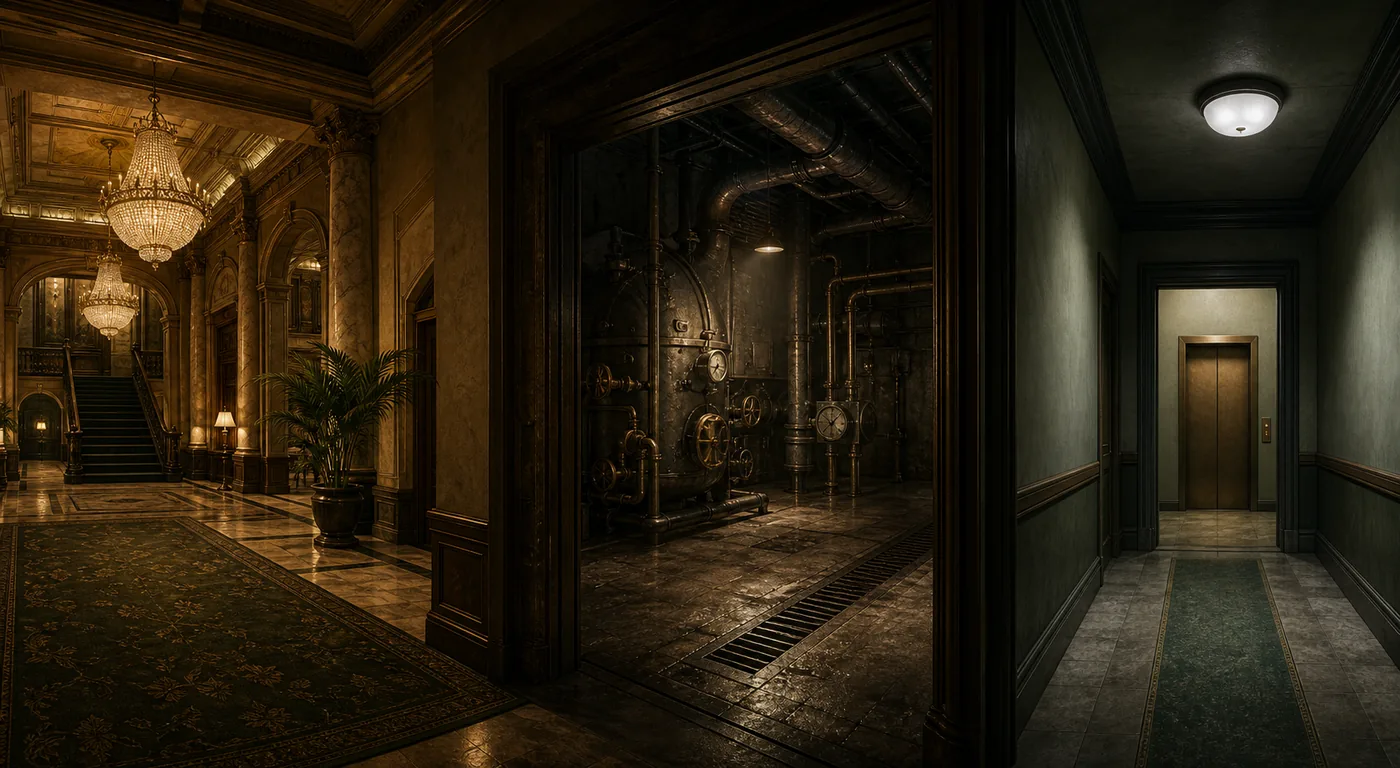
The Main Hall is the clearest orientation point in the Wikidot source. The Beverly Room gives the level a more specific destination inside the hotel, while the Boiler Room changes the setting from hospitality to infrastructure. That movement matters: a hotel door can lead to a guest-facing room, a maintenance route, or a deeper hazard space without announcing the transition in a reliable way.
The following concept image connects those three ideas visually. It is an editorial explanation created for this guide, not a map or a screenshot. Use the article text and the cited source for the actual lore boundary; use the image only to recognize the contrast between public, industrial, and service spaces.
- Name the room or zone before describing its risk.
- Treat a familiar lobby, desk, or elevator as an orientation cue, not proof of safety.
- Record whether a detail comes from Wikidot, another wiki, a video, or a game.
- Do not copy a fixed game map into a general lore explanation.
- Keep room names and exit claims tied to the source that uses them.
Backrooms Level 5 entities, hazards, and survival rules
Searches for Backrooms Level 5 entities often mix several different questions: whether an entity appears in the community-lore version, whether a specific room is dangerous, and which creature a game uses for a chase. Those questions should not be answered with one copied list. Entity names, intelligence, hostility, and even the meaning of safe behavior can change between sources.
The hotel itself creates risks before a named entity appears. Repeated doors make route memory unreliable. Long carpeted halls reduce useful landmarks. A boiler or service area may add heat, noise, slippery surfaces, machinery, and limited sight lines. Isolation can also turn a small navigation error into a long return route. These are practical reading and gameplay concerns, not evidence that every version shares the same survival system.
Use behavior-first caution. Preserve a return route, avoid sprinting through unknown doors, and verify whether an apparent objective belongs to a game. If a source says a room is safe, ask what safe means there: no named entity, no active chase, no environmental hazard, or simply lower risk than another zone.
| Signal | Safer interpretation | Common mistake |
|---|---|---|
| A hotel corridor repeats | Mark physical cues and keep a short return route. | Assuming a familiar door is the same door. |
| A room is described as safe | Check the source and define the kind of safety. | Turning one wiki claim into a universal rule. |
| Pipes, heat, or machine noise increase | Slow down and treat the area as an infrastructure hazard. | Focusing only on monsters and ignoring the environment. |
| A game adds a chase or key | Use that game's current guide and platform context. | Calling the game mechanic a lore-wide exit rule. |
The Boiler Room and route discipline
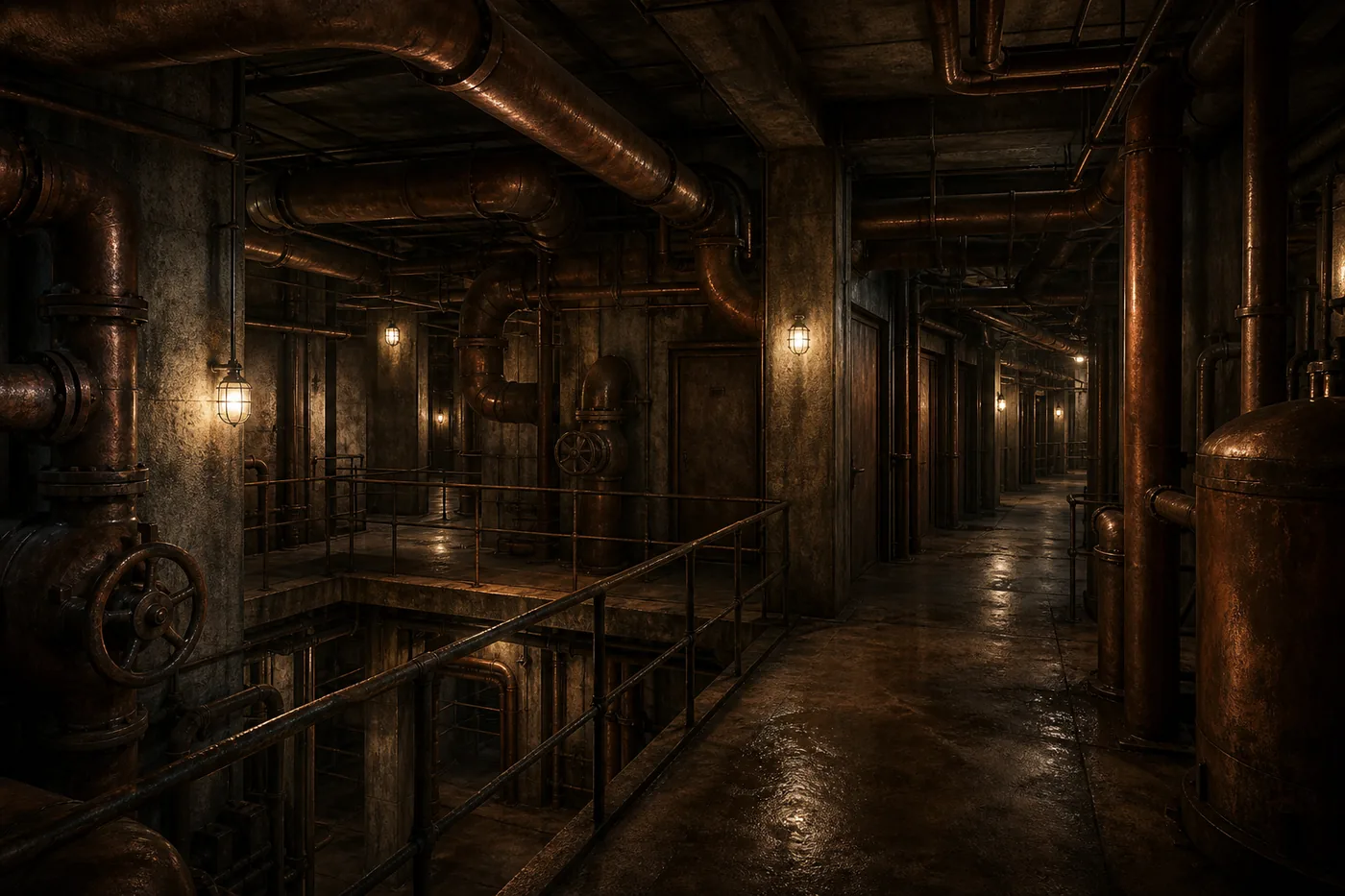
The Boiler Room is a useful Level 5 anchor because it shows how the Terror Hotel can move from a public building into an industrial maze. Pipes, valves, catwalks, doors, and machine noise change what counts as a landmark. In a prose source, that shift can signal isolation or a deeper part of the level. In a game, it may become a puzzle area, a chase route, or a checkpoint. The source decides which interpretation is valid.
Do not treat the boiler room as a reliable shortcut just because service corridors look more direct. Narrow routes can remove sight lines and create dead ends. Heat and mechanical noise can make it harder to judge distance or hear movement. If a route is being used for gameplay, confirm the current build and objective; if it is being used for lore, cite the page or continuity that describes it.
This second concept image is intentionally illustrative. It communicates the spatial problem of an industrial maintenance zone without pretending to show an official Level 5 screenshot, a verified map, or a real game interface.
- Use a physical landmark such as a valve cluster, stair, door shape, or catwalk junction.
- Keep one known route behind you before entering a maintenance branch.
- Do not confuse a visual transition with a confirmed entrance to another level.
- For a game, check the current walkthrough or patch context before using a puzzle route.
- For lore, label the community or creator continuity instead of promising a universal map.
Backrooms Level 5 entrances and exits
The query how to escape Backrooms Level 5 has mixed intent. A lore reader may be asking how the level connects to other areas. A player may be looking for a door, elevator, puzzle, or objective in a specific title. A video viewer may be following a creator's continuity. The correct answer is therefore conditional: match the exit claim to the source before following it.
A useful exit check has three parts. First, name the source and page or game. Second, identify whether the route is confirmed, conditional, rumored, or gameplay-only. Third, check whether the detail is tied to a version, update, or chapter. This prevents an old walkthrough from being treated as community lore and prevents a community transition from being presented as a guaranteed game objective.
For general orientation, do not leave a known route for an attractive elevator or service door without recording how you would return. In a collaborative setting, entrances and exits can be part of the story rather than a practical instruction. In a game, the exit may be a designed objective. Those are different kinds of information and should stay separate.
| Exit claim | How to classify it | Best next action |
|---|---|---|
| Community-lore transition | A wiki describes a conditional or source-specific path. | Cite the source and avoid calling it universal. |
| Game objective | A title uses a door, elevator, item, or scripted event. | Use the current game guide and platform context. |
| Video continuity | A creator's story implies a particular route. | Treat it as that creator's version of Level 5. |
| Rumored exit | The wording is uncertain or anecdotal. | Use it as lore flavor, not guaranteed guidance. |
Wikidot, Fandom, videos, and games: what changes
The Wikidot Level 5 page is the clearest directly verified source used for this guide. It calls the level Terror Hotel and organizes the page around the Main Hall, Beverly Room, Boiler Room, bases or outposts, and entrances and exits. The page also shows why image credits and licenses matter: its media notes identify source material separately from the community text.
Fandom summaries, videos, roleplay pages, and games may be useful, but they are not interchangeable with that source. A game can make the hotel more linear so a group can solve a route. A video can use the hotel as a visual setting for a creator-specific story. A fan page can add entities or factions for its own continuity. Those changes are not automatically errors; they are reasons to label the version being discussed.
This site keeps Backrooms Level 5 separate from the general Backrooms Levels hub. The hub explains how to compare levels. This page focuses on Terror Hotel, its named zones, environment-first risks, source-dependent exits, and lore-versus-game boundaries. Use the Level 2 guide for Pipe Dreams, the entity page for broader creature questions, and the Escape guide when the search is specifically about co-op gameplay.
| Page or source | Best for | Do not use it for |
|---|---|---|
| Backrooms Wiki Level 5 | Terror Hotel room names, source structure, and lore context. | A universal rulebook for every game or fan canon. |
| Backrooms Levels hub | Comparing environment, danger, entities, exits, and source fields. | Detailed Level 5 room or route answers. |
| Escape the Backrooms guide | Co-op communication and playable route context. | Proof that a game mechanic is universal lore. |
| Backrooms Entities guide | Broad entity recognition and source comparison. | A Level 5-specific entity roster without source labels. |
Backrooms Level 5 FAQ
What is Backrooms Level 5?
Backrooms Level 5 is the hotel environment commonly called Terror Hotel. The Wikidot version includes areas such as the Main Hall, Beverly Room, and Boiler Room, but other wikis, videos, and games can change the layout and rules.
Why is Backrooms Level 5 called Terror Hotel?
Terror Hotel is the common name used for the Level 5 hotel setting in the source discussed here. The name describes the atmosphere and setting, not a promise that every game or fan branch uses identical rooms.
Are there entities in Backrooms Level 5?
Entity presence and behavior depend on the source. Check the specific wiki, video continuity, or game before treating an entity name, threat level, or safe-room claim as universal.
How do you escape Backrooms Level 5?
There is no one cross-source exit route. Lore may describe conditional transitions, while a game may use a door, elevator, item, or scripted objective. Match the escape advice to the exact source and version.
Is this a Backrooms Level 5 game walkthrough?
No. This is a source-aware lore and environment guide. It explains why game routes can differ, then points gameplay searches toward the Escape the Backrooms guide and the current official platform context.