
Backrooms Level 10 Guide: Bumper Crop, Worms & Exits
Backrooms Level 10 is commonly called Bumper Crop: a broad rural landscape of wheat, barns, sheds, paths, and unusually constant daylight. The quick answer is that it is less about a single chase route and more about a deceptively calm environment with source-dependent hazards. This guide uses the Wikidot Level 10 page as its named reference, then separates community lore from game or video adaptations.
What is Backrooms Level 10?
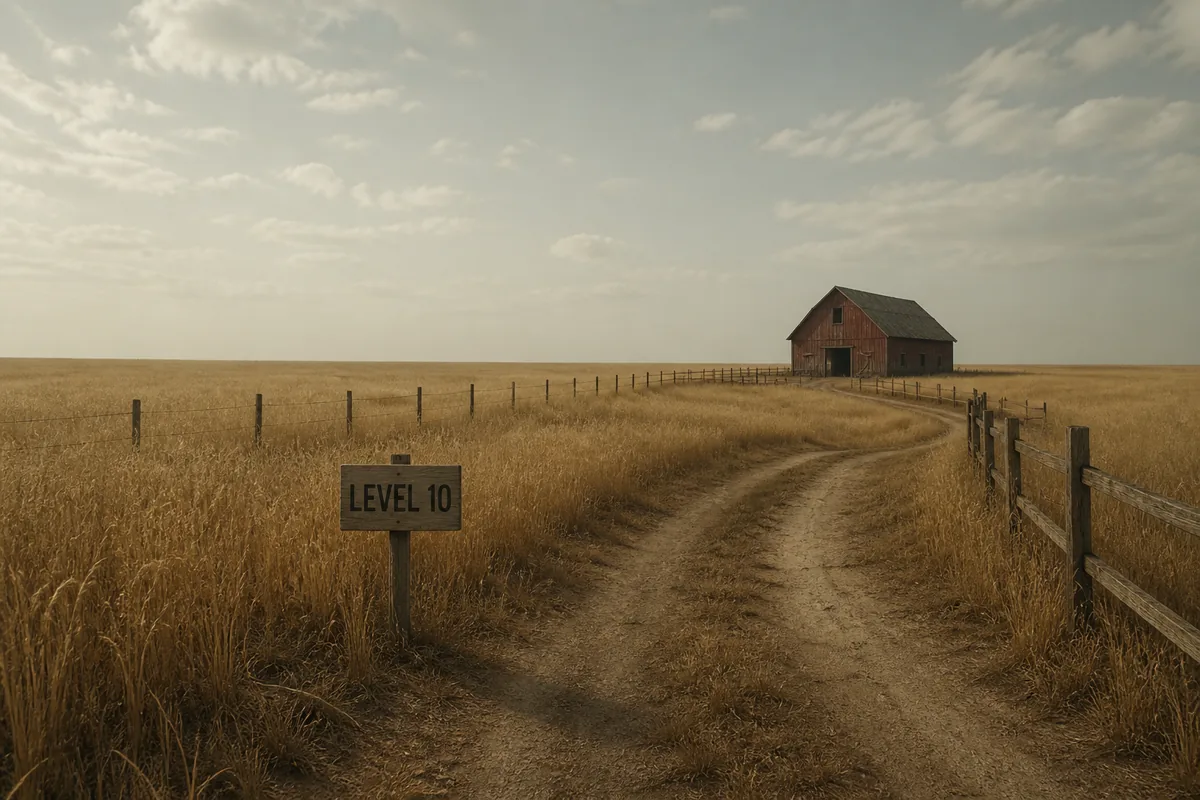
Backrooms Level 10 is the rural level most often associated with the name Bumper Crop. Instead of an office maze or an industrial tunnel, the environment presents open fields, wheat, daylight, dirt paths, water, and farm structures. The open horizon can feel safer than a corridor, but it also removes landmarks and makes distance difficult to judge.
The Wikidot Level 10 page describes a large agricultural landscape with fields, bodies of water, barns, sheds, and other structures. It also describes a small wormlike entity population beneath the soil. Those details belong to that source. A Fandom summary, video continuity, roleplay setting, or game can reuse the field concept while changing the entities, resource rules, exits, or weather.
The practical verdict is simple: treat Level 10 as a source-dependent field guide, not a universal map. Before using an exit, entity, or survival claim, identify the wiki, video, or game that supplied it. For lore, the environment and source boundary matter most. For a game, the current title and build matter more than a copied Level 10 summary.
| Question | Short answer | What can change by source |
|---|---|---|
| What is Level 10 called? | Bumper Crop is the common name used by the reference page. | Fan pages and games may use a different title or setting. |
| Is Level 10 a wheat field? | The reference version is a broad rural and agricultural environment. | Field size, daylight, structures, and weather are not universal. |
| Are entities present? | The reference page describes worms beneath the soil. | Entity rosters and behavior depend on the continuity. |
| Does Level 10 have one exit? | There is no cross-source exit route to memorize. | Lore transitions and game objectives can use different rules. |
Bumper Crop fields, barns, and lakes
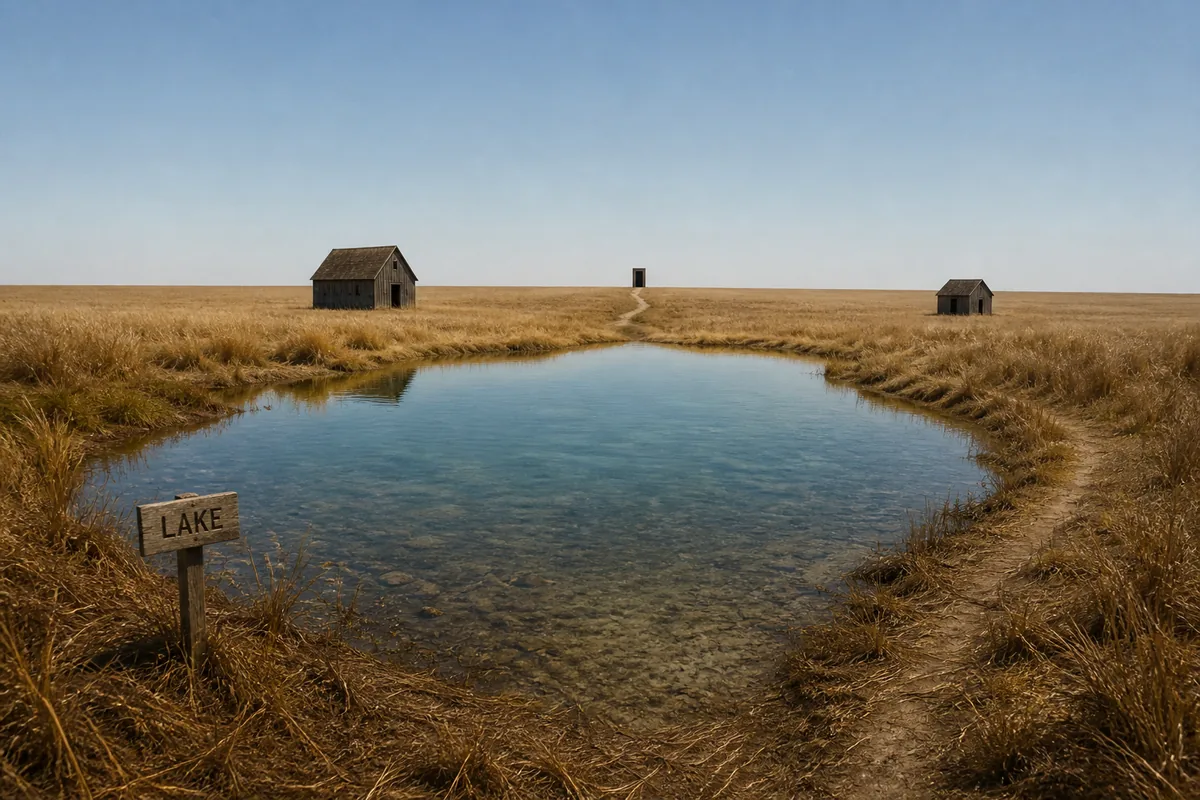
The most useful way to read Bumper Crop is as a set of rural zones rather than one endless photograph. Wheat fields create a repeated texture and few reliable reference points. Barns, sheds, fences, paths, and water can become landmarks, but a landmark is only useful if you can describe how you reached it and which direction you came from.
The constant daylight is part of the level's problem. Without a normal sunrise, sunset, or changing weather pattern, time becomes hard to estimate. A group can walk for a long time while believing it has only crossed one field. Use physical distance, not the brightness of the sky, as your route record.
Lakes and farm buildings also change the risk profile. A clear body of water may look like a shortcut or a safe resource, while a barn may offer shelter, materials, or a dead end depending on the source. The concept image below explains the visual contrast only; it is not an official map, screenshot, or guaranteed route.
- Name a field edge, fence junction, barn, shed, or path bend before moving on.
- Use a written or spoken route record because constant daylight weakens time-based memory.
- Treat a lake as a source-dependent transition or hazard, not an automatic shortcut.
- Check whether a building is described as a resource site, shelter, community space, or empty structure.
- Do not turn a visual landmark into a universal exit without a matching source.
Level 10 entities, worms, and soil hazards
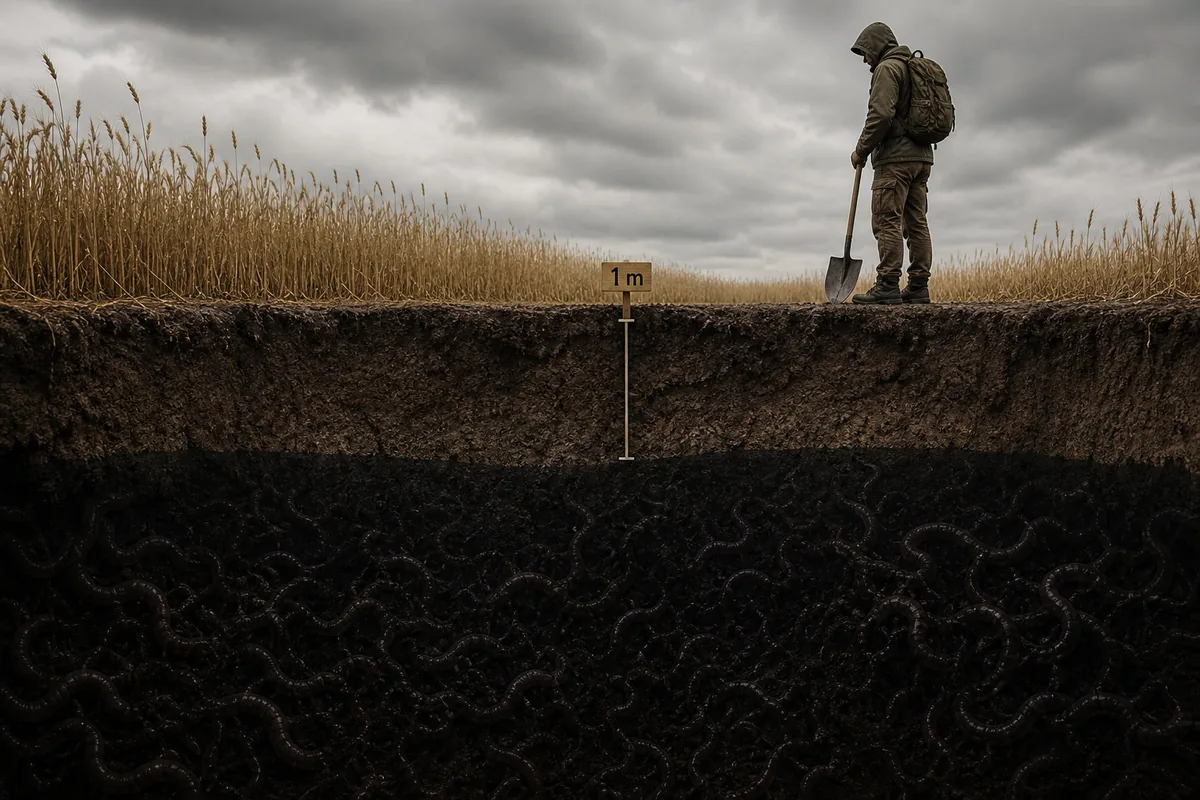
The defining entity question for the reference version is what lives below the field. The Wikidot page describes small wormlike entities beneath the soil and warns that digging deeper than roughly one metre can cause them to emerge rapidly. That is a source-specific lore detail, but it creates a clear reading rule: the ground itself is not automatically neutral just because the surface looks peaceful.
The one-metre detail should not be presented as a real-world measurement or as a universal game mechanic. It belongs to the fictional account being discussed. In another wiki or game, the underground threat may be absent, renamed, or replaced by a puzzle or creature encounter. Always label whether a number comes from the source text, a game objective, or an editorial summary.
For a cautious reading or playthrough, avoid unnecessary excavation, mark soft ground and holes, and keep the team together when the route leaves a visible path. If a game asks you to dig, follow its current instructions instead of importing the lore rule. If a page simply says Level 10 has monsters, look for the entity name and source before treating that statement as evidence.
| Signal | Safer interpretation | Common mistake |
|---|---|---|
| A field looks empty | Check the ground, structures, and route before calling it safe. | Assuming an open horizon means no danger. |
| A hole or disturbed soil appears | Treat it as a source-specific hazard and avoid unnecessary digging. | Turning one lore detail into a rule for every version. |
| A game adds a shovel or objective | Use the current game guide and version context. | Combining game mechanics with Wikidot lore. |
| An article names a monster | Check its behavior, source, and continuity first. | Using a generic monster list as a Level 10 roster. |
Backrooms Level 10 entrances and exits
Searches for a Backrooms Level 10 exit combine several intents. A lore reader may want to know how Bumper Crop connects to other levels. A game player may be looking for a door, lake, barn, or objective. A video viewer may be following a creator's continuity. These are different questions, so an exit answer is only useful when it names the source first.
Use a three-part check before trusting a transition. First, record the exact wiki, game, video, or page revision. Second, classify the route as confirmed, conditional, rumored, or gameplay-only. Third, check whether the route depends on a named structure, water body, field, or item. This prevents a community transition from becoming a fake universal walkthrough.
The safest general route discipline is to keep a known landmark behind you and avoid crossing water or entering a structure without a return description. In a game, follow the current objective and platform context. In lore, read the entrance or exit as part of that continuity rather than as a real instruction or a guaranteed path through every Backrooms version.
| Exit claim | How to classify it | Best next action |
|---|---|---|
| Community-lore transition | A source describes a conditional route to another level. | Cite the source and avoid calling it universal. |
| Game objective | A title uses a building, item, trigger, or scripted event. | Use the current game guide and build context. |
| Video continuity | A creator's story implies a specific field or lake route. | Treat it as that creator's version of Level 10. |
| Rumored exit | The wording is uncertain, copied, or anecdotal. | Use it as lore flavor, not guaranteed guidance. |
Wikidot, Fandom, videos, and games: what changes
The Wikidot Level 10 page is the directly checked reference used for this article. Its title identifies the level as Bumper Crop and its structure separates description, entities, communities, entrances, and exits. The page also exposes its licensing and media credits, which is useful evidence that the written lore and the photographs used around it should be treated as source material rather than anonymous internet facts.
Fandom pages, videos, roleplay projects, and games can still be useful, but they are not interchangeable with the checked page. A game may compress the field into a playable route, add a creature or puzzle, and change the exit for pacing. A video may use a barn or lake as a visual motif. A fan branch may rename the underground entities. Those differences are not automatically errors; they are reasons to label the version.
This site keeps Level 10 separate from the general Backrooms Levels hub and from the existing Level 0, Level 1, Level 2, and Level 5 pages. The hub explains how to compare level fields. This page focuses on Bumper Crop, rural navigation, the source-specific worm detail, exit classification, and the boundary between lore and playable adaptations.
Level 10 lore versus game and video versions
A strong Backrooms Level 10 guide should not pretend that a lore page is a walkthrough. Lore answers what the environment is supposed to mean inside a source. A game answers what the player must do next. A video answers what happens inside its creator's story. The keyword Level 10 can point to all three, which is why the source label belongs near the answer rather than buried at the end.
If you arrive from a game search, start with the title and platform, then use this page to recognize the shared rural idea. If you arrive from a wiki search, read the description and entity boundary before looking for an escape route. If you arrive from a video, note the creator and episode because a cinematic field or barn may not be part of a shared level system.
The useful takeaway is not a single route. It is a repeatable method: identify the version, separate environment facts from mechanics, record the source of each entity or exit claim, and keep practical navigation advice proportional to the evidence. That method also connects Level 10 naturally to the site's broader levels, entities, and Escape the Backrooms guides.
| Page or source | Best for | Do not use it for |
|---|---|---|
| Backrooms Wiki Level 10 | Bumper Crop description, worms, communities, and source context. | A universal map for every game or fan canon. |
| Backrooms Levels hub | Comparing environment, danger, entities, exits, and source fields. | Detailed Level 10 route decisions. |
| Escape the Backrooms guide | Co-op communication and playable route context. | Proof that a game mechanic is universal lore. |
| Creator video or fan branch | That continuity's atmosphere, story, or interpretation. | A verified rule for every Backrooms version. |
Backrooms Level 10 FAQ
What is Backrooms Level 10?
Backrooms Level 10 is the rural level commonly called Bumper Crop. The checked Wikidot version describes wheat fields, daylight, lakes, farm structures, and wormlike entities beneath the soil, while other pages and games may change the details.
Why is Backrooms Level 10 called Bumper Crop?
Bumper Crop is the title used by the directly checked Backrooms Wiki page. It points to the level's agricultural setting, but it does not guarantee that every video, game, or fan continuity uses the same name or layout.
Are there worms in Backrooms Level 10?
The Wikidot reference describes small wormlike entities below the soil and warns about digging beyond roughly one metre. This is source-specific lore, not a real-world measurement or a rule that automatically applies to every Level 10 game.
How do you escape Backrooms Level 10?
There is no single cross-source exit route. Match the entrance or exit claim to the exact wiki, game, video, and version, then distinguish a confirmed transition from a rumor or gameplay-only objective.
Is Backrooms Level 10 a game walkthrough?
No. This is a source-aware lore and environment guide. It explains Bumper Crop, field navigation, worms, and exit boundaries, then points game-specific questions toward the relevant title and current guide.