
Backrooms Level 8 Guide: Cave Systems, Hazards & Exits
Backrooms Level 8 is titled "Cave Systems" in the English Wikidot community canon. It is described as a sprawling network of natural-looking karst tunnels, chambers, watercourses, and vertical passages. The key takeaway is that the source does not offer one dependable game-style route map: it describes shifting space, poor visibility, and hazards that differ from chamber to chamber. Its 9th Road is a route in that specific wiki account, not a rule shared by every Backrooms story or game.
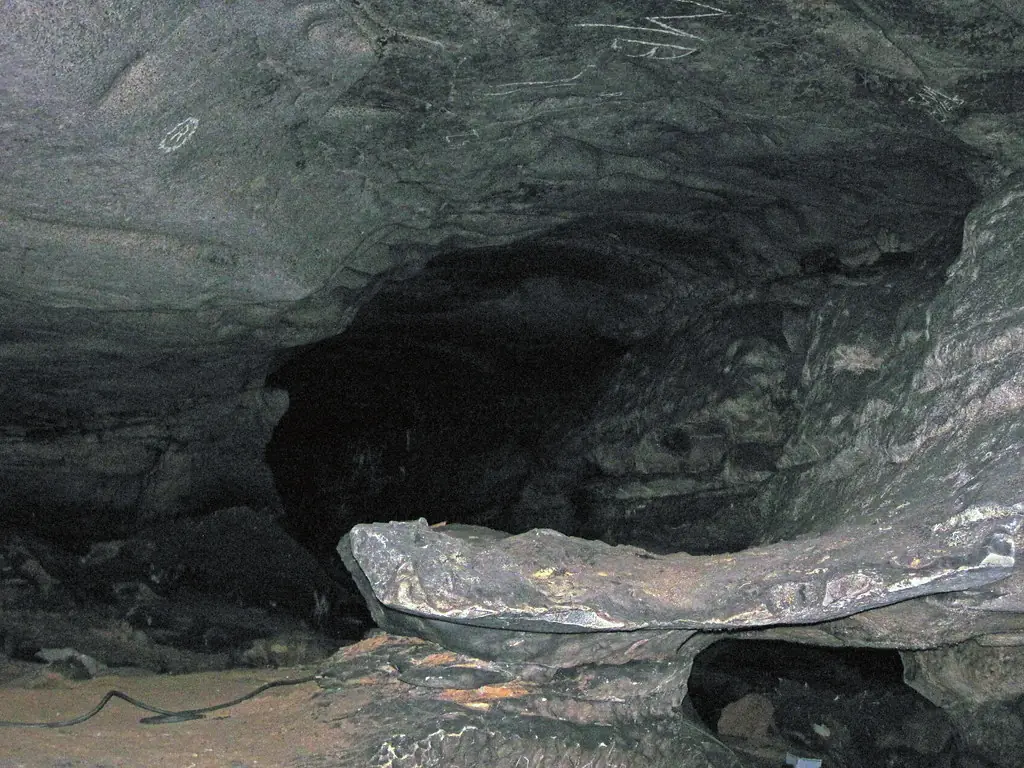
What Is Backrooms Level 8?
In the Wikidot version, Level 8 is an underground cave network whose passages are mostly presented as natural karst rather than a built facility. The article emphasizes darkness, cold, uneven ground, water, and geometry that can behave unpredictably. That combination makes Level 8 less like a corridor puzzle with a reliable route and more like a dangerous place whose layout cannot be assumed from one turn to the next.
"Cave Systems" is the Wikidot page title, not a universal official name. Backrooms lore is spread across separate collaborative wikis, videos, fan stories, and games. A claim on one page belongs to that source unless another continuity independently confirms it. This guide uses the English Backrooms Wiki page for Level 8, checked on 24 September 2026, and labels its details accordingly.
The page is for readers looking for the lore meaning of Backrooms Level 8. If the question is about a particular game's map, enemy behavior, or checkpoint, use that game's guide instead; a wiki exit description does not establish a playable route.
| Question | Source-aware answer |
|---|---|
| What is it? | A cave-system level in the English Wikidot community canon. |
| What is its signature feature? | A large, dark cave network with non-linear passages and water. |
| Is the layout fixed across Backrooms media? | No. The description is specific to its cited lore source. |
| Which exit is named? | The 9th Road, described as part of a route toward Level 9. |
Cave Systems and the Rough Level 8 Map
The community page describes a connected but inconsistent cave environment: low passages, larger chambers, shafts, streams, and lakes can sit close together. Some routes appear to loop or lead somewhere different when crossed again. In practical reading terms, the important point is uncertainty: a straight-looking tunnel is not proof that it stays straight, and a landmark on a community map should be treated as orientation context rather than a guaranteed coordinate.
The map below is the rough diagram published with the Wikidot article. Its labels show a few proposed points of interest and routes, including an approach marked from Level 6 and an exit marked toward Level 9. It is a community illustration credited to Kai4C, not an official game map, surveyed cave plan, or complete route chart. The page's own description leaves room for the network to be larger and stranger than the drawing can show.
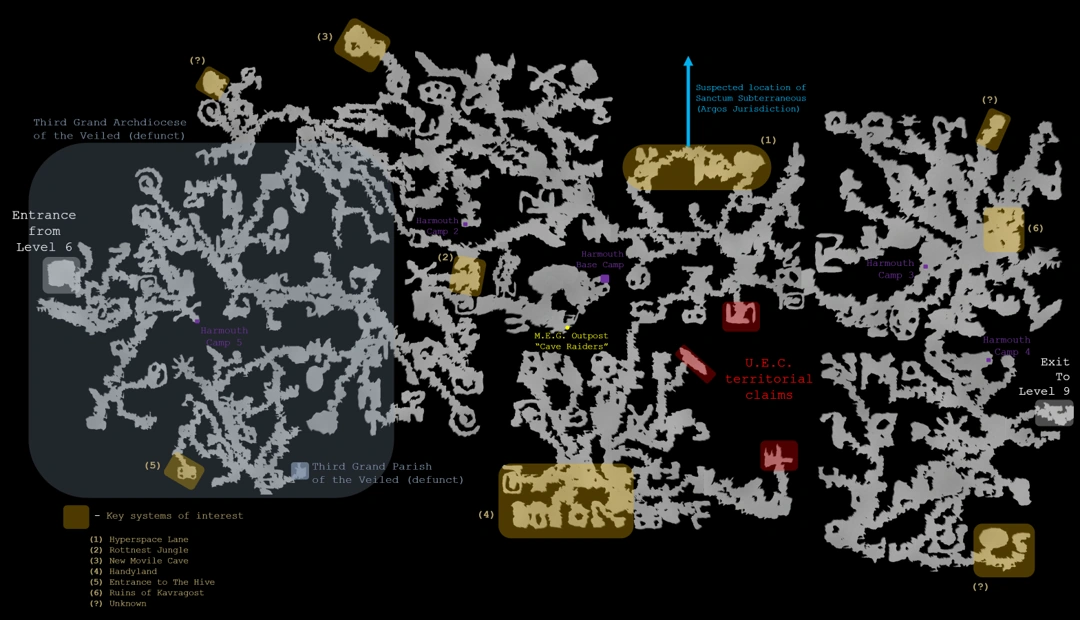
- Read labels as claims made by the map's source, not as universal Backrooms geography.
- A branching line indicates a possible connection in the diagram; it does not prove the same connection exists in a game.
- The source describes non-linear space, so the map cannot remove uncertainty from the lore itself.
Hazards in the Cave Network
The Level 8 article makes the environment itself the main threat. It describes little light, cold conditions, damp passages, loose rock, awkward tunnels, and drops or shafts that demand difficult climbing. Water is a recurring danger: a stream or flooded chamber can turn a route into a drowning risk, while a narrow ledge or slippery floor can make retreat just as difficult as moving forward.
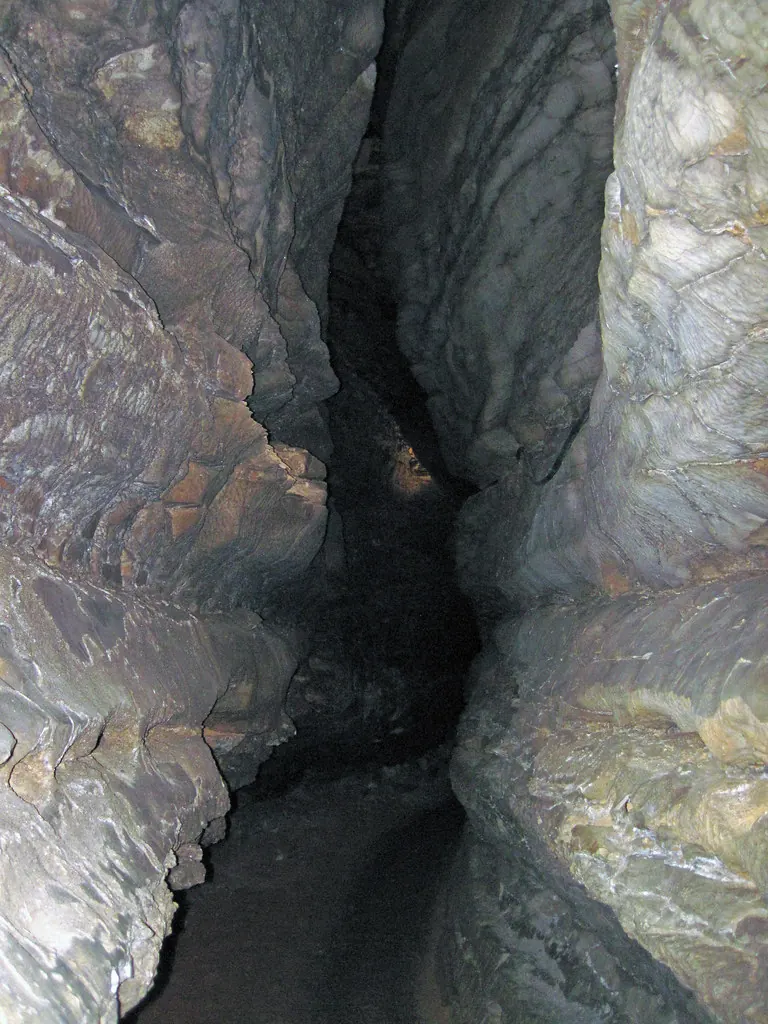
The source also describes some chambers as having poor air or dangerous gases. That is fictional lore, not a real-world cave-safety assessment. Real caves can have flooding, low oxygen, carbon dioxide, unstable rock, and other serious hazards; nobody should use a Backrooms article as cave advice. The photo is included only to show a real passage shape that helps readers picture what the lore means by a confined cave route.
Entity claims also vary by location in the source: some areas are described as quiet, while others have signs of life. The article does not make every cave equally populated. Keeping that distinction is more useful than assuming a creature appears at every turn or importing an enemy roster from a game.
| Source detail | Why it matters when reading the lore |
|---|---|
| Low light and winding passages | A description of the level's defining navigation problem, not a promise of a solvable fixed maze. |
| Water, streams, and flooded chambers | The source treats drowning as a major hazard; water is not automatically a safe landmark. |
| Loose rock, narrow tunnels, and shafts | The route can be difficult to cross or reverse, even without an entity encounter. |
| Uneven air and local habitats | Conditions differ between chambers; the article does not describe one uniform environment. |
Entrances, the 9th Road, and Exits
The clearest route detail in the cited page is the 9th Road, presented as the recommended way out toward Level 9 and as part of the Dark Highway. The community map also labels an approach from Level 6. These are statements inside one lore continuity; other Backrooms pages may describe different transitions, and a game's progression may use entirely different doors, checkpoints, or level order.
If you are comparing source pages, record the source beside each route claim. That small step prevents a common mix-up: a reader sees a wiki transition, then assumes a game must let the player follow it. The table keeps the specific Wikidot account separate from what it does not establish.
When comparing sources, separate what the prose states, what a map draws, and what a reader infers. The Wikidot prose presents the 9th Road as a recommended route toward Level 9; a line on a rough map does not establish that a passage is safe, open in every account, or guaranteed for every traveler.
To check whether a game includes this route, record the game title and version first, then compare its official description, update notes, or game-specific walkthrough. A clip or another fan wiki's level number is not enough to prove that it follows the same continuity. Without a game-specific source, label the route as part of the Wikidot account.
For a reliable comparison, keep the page title, URL, access date, and exact claim together. Check entrances, exits, and hazards separately. This makes it harder to present a map annotation as a statement in the source text or to merge rules from different versions.
| Route reference | What the checked source says | Limit |
|---|---|---|
| Approach | The rough map labels an entry from Level 6. | A map annotation, not a universal entry rule. |
| Exit route | The 9th Road is recommended toward Level 9. | The route belongs to the English Wikidot account. |
| Dark Highway | The 9th Road is tied to the Dark Highway route. | Other canons and game maps may differ. |
| Exact turns or coordinates | No stable step-by-step coordinate route is established here. | The source describes shifting, non-linear space. |
- Use the Levels guide to compare source-specific descriptions across numbered levels.
- Use the Level 6 guide when the question concerns that level's own lore, not a guaranteed transition.
- Use the Escape the Backrooms guide only for that game's playable mechanics and routes.
Level 8 Lore vs. Escape the Backrooms
A wiki page, a video continuity, and a Steam game can all use numbered levels while telling different stories. The words "Level 8" alone do not identify which version a search result is describing. Check for a source name, game title, map image, or named route before applying a detail elsewhere.
This page summarizes community lore. It does not claim that the English Wikidot entry is canon for every creator, nor that the rough map matches a particular game build. For gameplay questions, switch to the dedicated game guide; for broader source context, start with the Backrooms explainer. The distinction keeps answers useful without pretending that separate versions agree.
| If the question mentions… | Use this context |
|---|---|
| Cave Systems, 9th Road, or the Dark Highway | The English Wikidot community lore summarized here. |
| A named Steam, Roblox, or video version | That game's or creator's own map and rules. |
| Whether all Backrooms stories share one route | No; compare the source before combining details. |
Backrooms Level 8 FAQ
What is Level 8 of the Backrooms?
In the English Wikidot community version, Level 8 is called Cave Systems and is described as a large network of natural-looking caves. The name and route details belong to that source, not every Backrooms canon.
Is Backrooms Level 8 dangerous?
The cited lore portrays it as highly hazardous because of darkness, unstable passages, water, difficult climbs, and conditions that vary by chamber. These are fictional setting details, not real cave-safety advice.
How do you get to Level 8 in the Backrooms?
The rough Wikidot map labels an approach from Level 6, while the prose focuses more on routes through the cave network. That is a source-specific lore reference; games may use different entry mechanics.
How do you leave Backrooms Level 8?
The Wikidot page recommends the 9th Road toward Level 9 and associates it with the Dark Highway. Treat this as one community canon's route, not a universal or game-verified exit.
Is Level 8 the same in Escape the Backrooms?
Not automatically. A numbered game level can use different layouts, enemies, and checkpoints. Use the game-specific guide for playable routes and the cited wiki page for this community lore description.