
Backrooms Level 7 Guide: Thalassophobia, Routes and Canon
Quick answer: Backrooms Level 7 is often called Thalassophobia in the English Backrooms Wiki continuity. It is an ocean-focused level where a small dry route gives way to deep, dark water and the fear of not knowing what is below the surface. The name, layout, entities, entrances, and exits can change across wikis, videos, and games, so this guide identifies the source boundary before describing a route. Use the page for lore context and source checking; use a current game walkthrough when the query really means a playable map.
What is Backrooms Level 7?
Backrooms Level 7 is a numbered level commonly associated with an ocean or flooded interior and the name Thalassophobia. In the version used for this guide, the level starts with a comparatively small dry area and then opens into a huge body of dark water. The contrast is the point: the reader can see a route, but cannot reliably see its depth, edge, or what may be moving below it. The level turns a familiar swimming or maintenance space into a navigation problem built around uncertainty.
The word Thalassophobia is a useful search clue, not a guarantee that every result describes the same page. Wikidot lore, Fandom branches, video series, Roblox experiences, and Escape the Backrooms can assign different numbers, creatures, puzzles, and exits to similar water imagery. A careful answer to “what is Level 7 in the Backrooms?” therefore gives the common setting first, names the checked continuity second, and marks anything that is a rumor or game mechanic.
The page is informational rather than a claim that a single Backrooms canon is official. It helps a beginner recognize the Level 7 cluster, compare it with neighboring level pages, and decide whether the next click should be a lore source, a level hub, or a game guide. Searchers who only need a definition can stop here; readers who need a route should keep the source labels attached to every entrance and exit below.
| Question | Short answer | Scope note |
|---|---|---|
| What is it called? | Level 7, often Thalassophobia. | The title varies by canon. |
| What does it look like? | A dry approach and deep, dark water spaces. | This is an editorial summary, not a fixed map. |
| What is dangerous? | Depth, low visibility, isolation, and uncertain routes. | Entity claims need a named source. |
| Is it a game level? | Not automatically. | Game objectives require the game title and build. |
The water environment and why Level 7 feels different
The most useful recognition rule is to read the environment before searching for a monster. Look for tiled or concrete surfaces, a controlled artificial light source, a narrow dry edge, and water that becomes darker as it extends away from the route. The emotional threat is not only a creature. It is the missing information: you cannot see the floor, measure the distance to the next stable platform, or know whether a bright opening is a real exit.
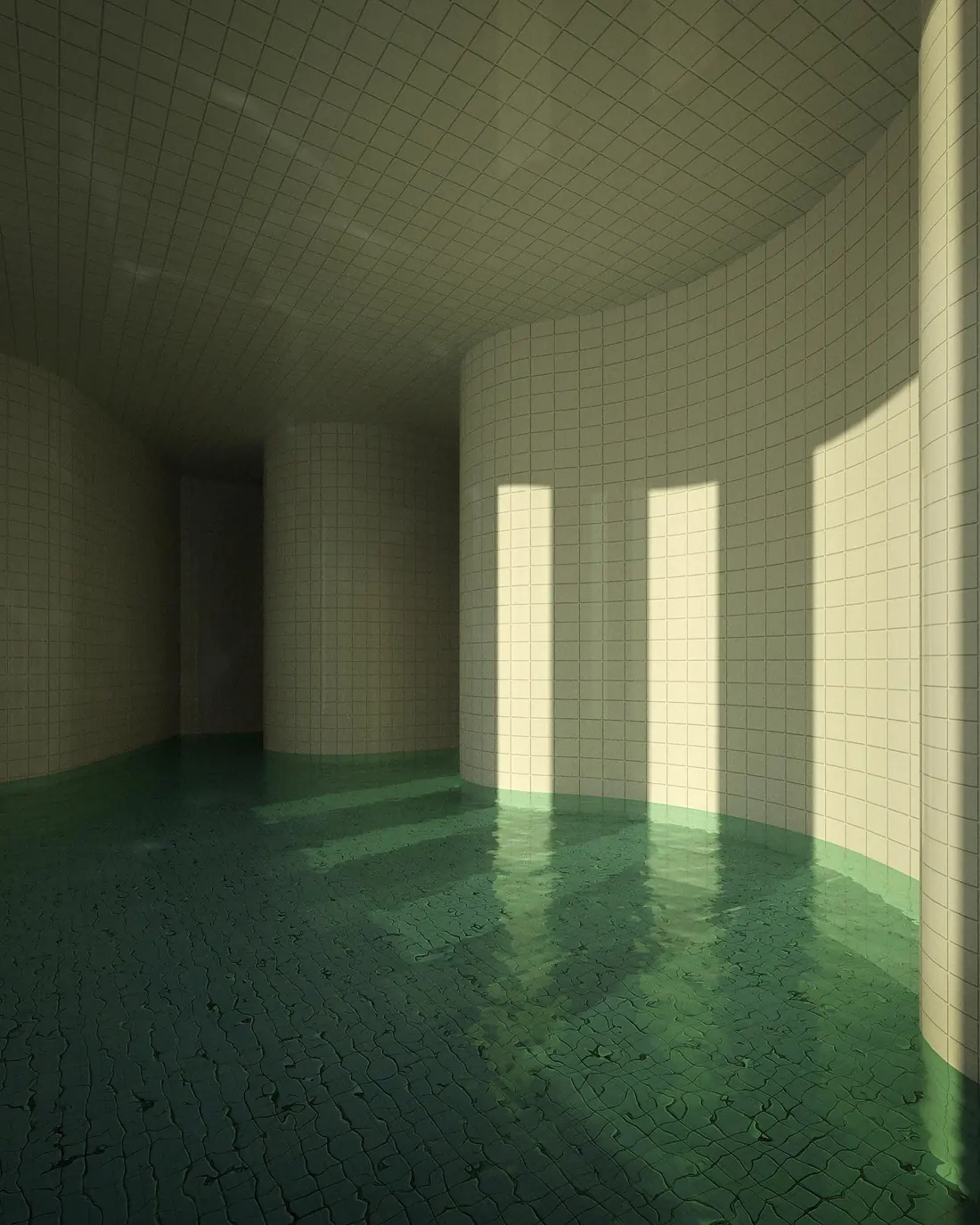
The existing Poolrooms visuals on this site are shown here as an environmental comparison, not as Level 7 evidence. They demonstrate how tiled water, rounded chambers, and door-like openings can create a related liminal mood while belonging to a different Level 37 article. Keeping that distinction visible matters because image searches often collapse Poolrooms, Level 7, and game maps into one visual vocabulary.
For a reader, the practical takeaway is simple: use an image to identify atmosphere, then use the text and source link to decide what the image can prove. A concept or comparison image cannot establish a canonical entrance, an entity roster, or a safe route. Those claims need a written source and a qualifier such as commonly described, listed by the cited wiki, or used by a specific game.
- Treat the dry edge as a recognition clue, not proof of a universal Level 7 layout.
- Assume that depth and visibility are the first route questions in a water-focused version.
- Do not turn a Poolrooms image, fan map, or game screenshot into evidence for every canon.
How Level 7 entrances and exits should be read
Level 7 route claims are unusually easy to overstate. A wiki may describe a transition from another water-related level, a door, a fall, or a conditional passage. A video continuity may use a visual cut instead. A game can replace all of those ideas with a key, a pressure switch, a boat, or a timed objective. Before answering “how do I get to Level 7?”, identify whether the question names a lore source or a playable title.
For lore, write the route as a possibility with its source attached. Words such as may, rare, conditional, and reported are meaningful because community pages are collaborative and can change. A short list of exits is safer than a confident map when the source does not prove that the path works in every version. The reader should know what was listed, what was inferred, and what was not found.
For gameplay, the correct next step is a current game guide, not a lore summary. Search terms such as “level 7 escape the backrooms” can describe a chapter, a fan map, or a specific update. Link to the Escape the Backrooms guide for co-op planning, then verify the game platform and current build before giving puzzle steps. This keeps high-intent game traffic from cannibalizing the informational Level 7 page.
| Route question | Safe editorial answer | What to verify |
|---|---|---|
| How do I enter Level 7? | Use the entrance listed by the named lore source. | Wiki branch, revision, and qualifiers. |
| How do I leave it? | Summarize reported exits as conditional connections. | Whether the route is lore or game logic. |
| Is there a map? | A map may be community-made or game-specific. | Creator, license, date, and scope. |
| Can I follow this in a game? | Only after naming the game and build. | Official store page and current walkthrough. |
Entities, hazards, and the difference between fear and evidence
A Level 7 search often brings up entity names, but the water setting itself may be the primary hazard. Deep water removes landmarks, limits movement, and makes sound difficult to interpret. Fatigue, a missing return route, and a false sense of safety near a light can matter more than a named creature. This is why a source-aware guide starts with environment and route discipline before it lists entities.
Entity information should be attached to a continuity. A Wikidot entry can describe one set of reports, while Fandom, a video series, or a game can use another roster. If a page says that an entity appears in Level 7, check whether it means a documented lore report, an interpretation, or a gameplay spawn. Avoid presenting a low-confidence report as a universal rule, especially when the Similarweb question tab shows users asking how to get there rather than how to fight.
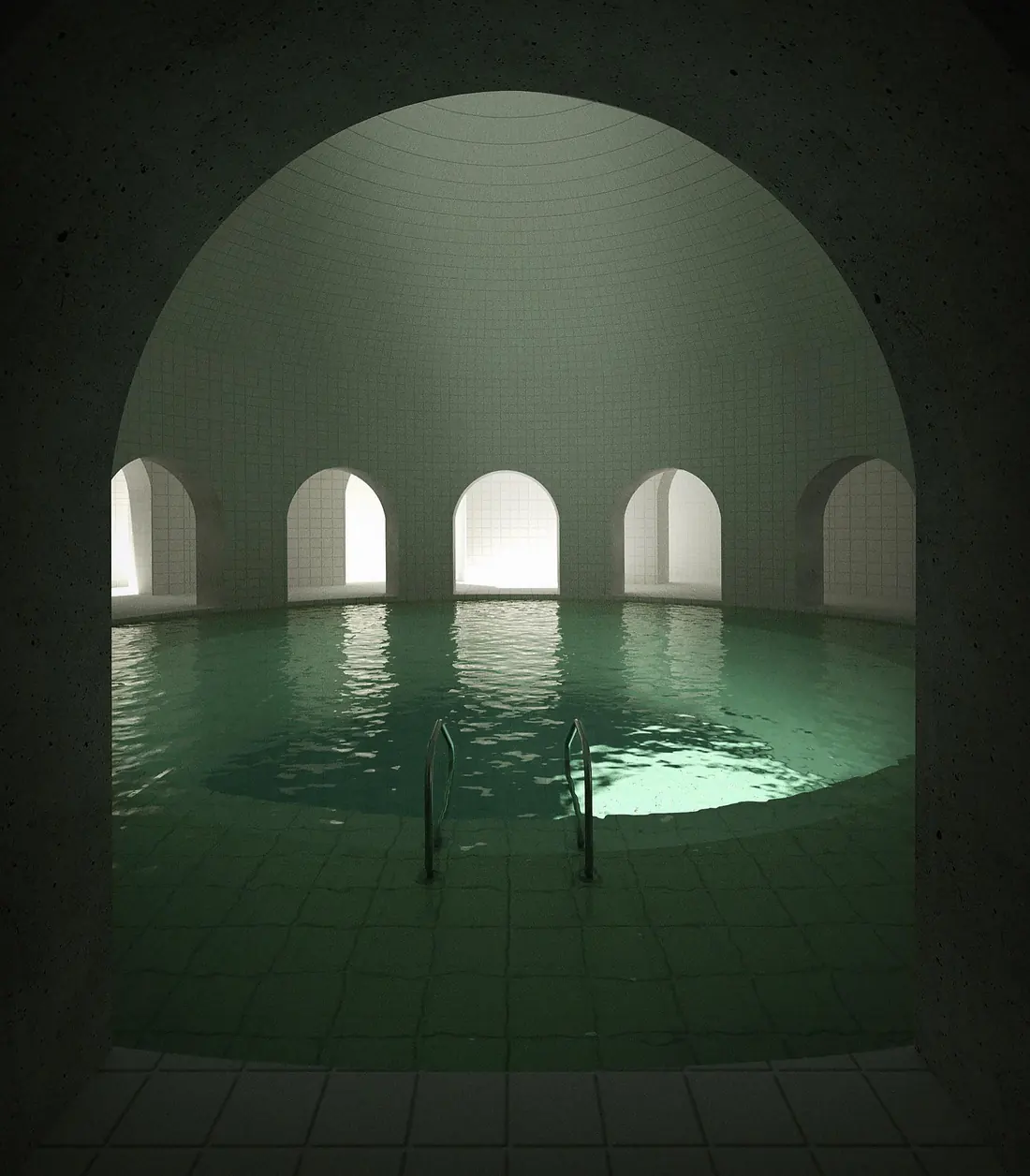
The best reading order is: identify the water boundary, locate a stable return point, note the source's entity wording, and only then compare a game mechanic. The image below is another comparison visual from the site's Poolrooms set. It supports the idea of curved rooms and limited sight lines; it does not prove that Level 7 has a particular ladder, door, enemy, or safe zone.
| Claim type | How to label it | Page action |
|---|---|---|
| Source-listed entity | Name the wiki, game, or continuity. | Keep the behavior inside that section. |
| Community report | Use reported or unverified when evidence is limited. | Do not write it as a universal fact. |
| Environmental hazard | Describe depth, visibility, sound, and isolation. | Lead with the route decision. |
| Game mechanic | Name the game and version context. | Link to the game guide for steps. |
Backrooms Level 7 lore vs. game interpretations
The query boundary is the main information gain of this page. “Backrooms Level 7” is usually an informational lore search, while “level 7 escape the backrooms” is a gameplay search. The two can share a number and an ocean mood without sharing a map, objective, entity behavior, or exit. Treating them as one answer creates a page that is too vague for players and too confident for lore readers.
When a result names Wikidot or a community wiki, keep the explanation in the lore lane and preserve the source's uncertainty. When a result names Steam, Roblox, a chapter, a puzzle, or a game update, switch to the game lane. The site does not host downloads or pretend that a generated or comparison image is official media. It points readers toward platform pages and current walkthroughs when the task is playable.
This boundary also explains why some related keywords are not new pages. “Backrooms level 37” belongs to the existing Level 37 guide, “backrooms level 8” belongs to the Cave Systems page, and entity terms such as Smiler belong to the existing entity cluster. They are useful internal anchors here, but they should not change Level 7's primary intent.
- Lore intent: answer what Level 7 is, why it is called Thalassophobia, and which source is being summarized.
- Route intent: report entrances and exits with qualifiers instead of promising a universal map.
- Game intent: name the game first, then use its current objectives, enemy rules, and checkpoint logic.
- Mixed intent: give the lore definition, then link to the Escape the Backrooms guide for playable steps.
A source-aware reading order for Level 7
Start with the common answer: Level 7 is often described as a water-focused or oceanic level associated with Thalassophobia. Next, identify the source and separate what it lists from what the image or search snippet merely suggests. Then read the environment, route, entity, and exit notes in that order. The sequence keeps fear, atmosphere, and evidence from being mixed into one dramatic but unusable paragraph.
For comparison, open the Backrooms Levels hub to see how environment, danger, entities, exits, and source context are recorded across the database. Level 6 helps readers understand a neighboring route question, Level 8 provides a different hazard profile, and Level 37 explains why Poolrooms imagery should not be silently merged with Level 7. If the query is about a playable chapter, move to the Escape the Backrooms guide and verify the current platform source.
The final test is simple. A useful Level 7 answer lets a reader explain the common name, recognize the water-space mood, identify the uncertainty around routes and entities, and choose the correct next page. It does not need to invent a definitive map. In a fragmented fiction setting, clearly scoped uncertainty is more useful than a confident detail with no source.
Backrooms Level 7 FAQ
What is Level 7 in the Backrooms?
Level 7 is commonly associated with an ocean or flooded environment and the name Thalassophobia in some community-lore continuities. The exact layout, threats, and routes depend on the source.
Why is Backrooms Level 7 called Thalassophobia?
Thalassophobia means fear of deep water. The name fits versions of Level 7 that place a small dry route beside dark, deep water where depth and movement are hard to see.
How do I get to Level 7 in the Backrooms?
There is no universal route. Check the named wiki or story continuity first, because an entrance may be a conditional lore connection, a fan interpretation, or a game objective.
Are there entities in Backrooms Level 7?
Entity rosters vary by canon. Treat a wiki report, video interpretation, and game spawn as separate claims, and lead with environmental hazards such as depth, visibility, and isolation.
Is Escape the Backrooms Level 7 the same as the lore level?
Not automatically. A game can use the number or water mood while changing the map, puzzles, checkpoints, and enemy behavior. Use a current game guide for playable instructions.