
Skin Stealer Backrooms: Entity 10 Lore and Game Differences
The Skin-Stealer is Entity 10 in the English Backrooms Wiki: a humanoid creature associated with disguises and repeated speech. Those details describe one community-lore source, not a universal rule shared by every Backrooms story or game. This guide identifies what the cited page actually says, separates source claims from interpretation, and explains how to check a game version before carrying its mechanics into another setting.
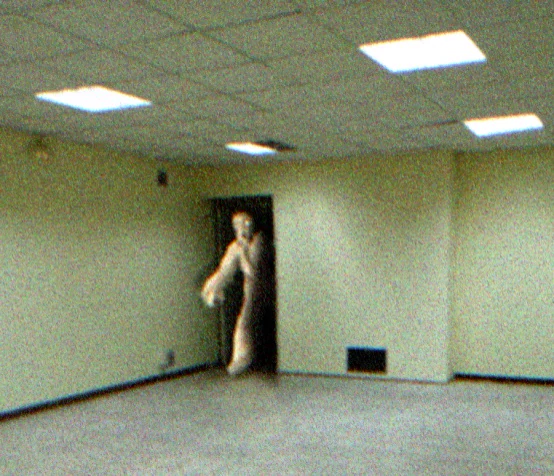
What is the Skin-Stealer in the Backrooms?
In the Backrooms Wiki entry used for this guide, Skin-Stealer is the common name for Entity 10. The page describes a large humanoid that can wear human skin as a disguise, repeat speech it has heard, and behave differently depending on whether it needs to feed. These are claims within that page's version of the lore; another wiki, creator, or game may use the name differently.
The useful short answer is therefore two-part: Entity 10 is the reference point for the Skin-Stealer on the cited wiki, while the broader phrase skin stealer backrooms can also lead to videos, fan interpretations, and game-specific enemies. Check the source attached to a claim before treating it as a shared rule. A page about Escape the Backrooms, for example, describes that game's encounter rather than rewriting every community version.
The English wiki entry also places the creature across many levels, with Levels 1, 2, and 3 named as common locations. That placement belongs to the source entry. It should not be used to predict where the enemy appears in a particular game, because developers can change levels, pacing, and behavior for gameplay.
| Question | What the cited entry says | How to use the detail |
|---|---|---|
| Name | Skin-Stealer / Skin-Stealers; Entity 10 | Use Entity 10 when you mean this wiki page. |
| Common setting | Many levels; especially Levels 1 to 3 | Treat this as source-specific placement, not a game map. |
| Disguise | The entry describes human skin as a covering | This is fictional lore, not a real-world identification method. |
| Speech | It can repeat speech without understanding language | A game may use different audio or detection rules. |
| Behavior | The entry distinguishes a docile state from feeding behavior | Do not assume every adaptation uses the same state system. |
What the Entity 10 source actually describes
The Backrooms Wiki's Entity 10 page is the primary source for the lore summary here. It calls Skin-Stealers large humanoid entities, says they are found on many levels, and names the first three levels as especially common. It describes their behavior as usually aimless when they do not need to feed, with hostility associated with aggravation or hunger. A summary should preserve those conditions rather than flatten them into “always attacks on sight.”
The same entry describes a pale, tall appearance and an outer surface that can hold removed skin. It says the covering can be made to look and feel more like a living person. This body-horror explanation is part of that fictional article. It is not medical information, a realistic biological account, or a reliable way to identify a person. Keeping that boundary visible matters because search snippets and short videos often remove the source context.
The article also gives Entity 10 a translucent-blood detail and says the creature's covering is eventually digested. Those details are useful when comparing retellings because they are specific claims, not generic monster traits. If a game omits them, that does not make the game inaccurate: it may have selected only part of a lore branch or created its own enemy design.
- Name the source page before summarizing a trait.
- Keep conditional behavior conditional; do not rewrite it as an absolute rule.
- Mark appearance and body-horror details as fictional descriptions.
- Check whether a game borrows the name, the appearance, the behavior, or only a loose inspiration.
Disguise and mimicry: lore motifs, not detection advice
The disguise is the Skin-Stealer's defining story idea: the cited page says it can use a human skin covering to resemble a person. It also describes the creature as able to repeat words it has heard, without understanding language. In a horror story, those two details create uncertainty about identity and communication. They are motifs for tension, not dependable tests that a reader should apply outside fiction.
The source itself cautions that speech is not a good way to tell a Skin-Stealer from a human because it rarely uses its voice. That caveat is easy to lose when the creature is reduced to a one-line summary. A careful explanation keeps both pieces together: mimicry is in the lore, but the lore does not offer a simple voice-based detector. The same principle applies to appearance details; a fictional clue is not evidence about a real person.
When comparing another account, ask which elements remain. One retelling may emphasize the disguise, another may focus on a sound cue, and a game may give the enemy a visual silhouette or scripted chase instead. Record those differences as adaptation choices. Do not merge them into one list of universal weaknesses unless the specific source or game's documentation supports that list.
Skin-Stealer in Escape the Backrooms versus wiki lore
Searches for skin stealer escape the backrooms have a narrower job than searches about Entity 10: players want to understand a particular encounter. The Steam store identifies Escape the Backrooms as a game, but its store page is not a complete enemy-mechanics manual. The community video below is useful for seeing one Stage 2 playthrough; it is player footage, not an official promise that every encounter or game build behaves the same way.
Use the comparison below to keep the scopes separate. The wiki column summarizes a named community-lore page. The game column should be filled only from the game build, level, or directly observed footage being discussed. If a guide states a precise route, trigger, speed, or despawn condition, it should name the title and version where that information was checked. This page deliberately sends route questions to the site's existing Escape the Backrooms guide.
A useful practical rule is to carry over the identity of the creature only when the game clearly references it. Do not carry over wiki habitat, feeding, disguise, or speech rules as game mechanics by default. Conversely, a scripted game chase does not prove that every Skin-Stealer story follows the same chase pattern.
| Topic | Backrooms Wiki Entity 10 entry | Escape the Backrooms or another game |
|---|---|---|
| Scope | One community-wiki lore page | One title, level, and game build |
| Behavior | Source describes docile and feeding states | Check gameplay or a current title-specific guide |
| Location | The entry names common lore levels | Use the game's own level names and layout |
| Evidence | Read the linked source and its revision context | Record the game title and observed version/build |
| Best next page | This Entity 10 guide | Escape the Backrooms walkthrough |
A four-step way to verify a Skin-Stealer claim
First, identify the place where the claim appears. A Backrooms Wiki entry, a game store page, a walkthrough, and a creator's video have different jobs. The wiki page can support what that branch of lore says; a store page confirms product identity; a playthrough can show one observed encounter. None of those sources automatically validates the others.
Second, preserve the exact scope. “Entity 10 in this wiki entry” is precise. “The Skin-Stealer always appears on Level 2” is not precise unless the source and game are named. Third, separate what the source states from what you infer. For example, repeating heard words is stated by the wiki; a player concluding that silence guarantees safety would be an unsupported inference.
Finally, date claims that can change. Game behavior can shift after an update, while a community-wiki page can be revised or represent one branch of a changing setting. When a future walkthrough adds current triggers or routes, note the title, level, build or check date, and the evidence used. This page focuses on stable source boundaries and should be revisited when its linked source changes materially.
- Name the source and the version or game title.
- Quote or summarize only the detail that source supports.
- Label interpretation and observed gameplay separately from source facts.
- Recheck time-sensitive game mechanics after updates.
Do not confuse a Skin-Stealer with every Backrooms monster
A broad search for Backrooms monsters can mix several named creatures into one result list. Hounds, Deathmoths, Smilers, Partygoers, and Skin-Stealers do not become the same entity because a game or fan page groups them together. Use the entity index when you need a broad comparison, then open a dedicated guide for one creature's source and behavior.
This guide's boundary is Entity 10 and its adaptations. It does not try to rank every creature, provide a universal survival strategy, or replace the full entity index. The site also keeps the Smiler and Partygoers in their own pages. Those links let a reader compare source boundaries without turning this page into a second broad directory.
The short version
For the Skin-Stealer Backrooms query, start with the named source: the English Backrooms Wiki entry identifies the creature as Entity 10 and describes disguise and mimicry as part of its lore. Keep those details attached to that source rather than treating them as universal canon.
For a game question, name the title and level and use a title-specific walkthrough. A community clip can illustrate one encounter, but current mechanics need current game evidence. That distinction gives readers a clear answer without blending wiki lore, fan retellings, and gameplay into one unsupported rulebook.
Skin-Stealer questions, answered
Is the Backrooms Skin-Stealer Entity 10?
In the English Backrooms Wiki page cited here, yes: Skin-Stealer is the common name for Entity 10. Other wikis, games, or creators can use different numbering or adaptations, so include the source when you need a precise answer.
Can a Skin-Stealer talk or understand people?
The cited Entity 10 entry says it can repeat heard speech but does not understand language. The same page says its voice is uncommon, so it does not present mimicry as a reliable way to identify the creature. A game may use different audio rules.
Where does the Skin-Stealer appear in Backrooms lore?
The cited wiki entry says Skin-Stealers have been found on many levels and are most common on Levels 1, 2, and 3. That is a claim from one lore source; check a game's level guide separately for its own placement.
Is the Skin-Stealer in Escape the Backrooms the same as Entity 10?
A game may borrow the name or design, but that alone does not make every wiki trait a game mechanic. Use the game title, level, and build as the scope, and see the Escape the Backrooms guide for route or encounter questions.
Can you identify a Skin-Stealer by its voice or appearance?
Only within the fictional source being discussed. The wiki describes mimicry and a disguise, but also says speech is not a good test. These are horror-story details, not real-world identification advice.
Is a Hound another name for the Skin-Stealer?
No. The site treats Hounds and Skin-Stealers as separate entity topics. The broad entity index is the better place to compare named creatures before opening their individual source pages.